
Simple Relaxation Techniques to Ease Pelvic Pain and Anxiety
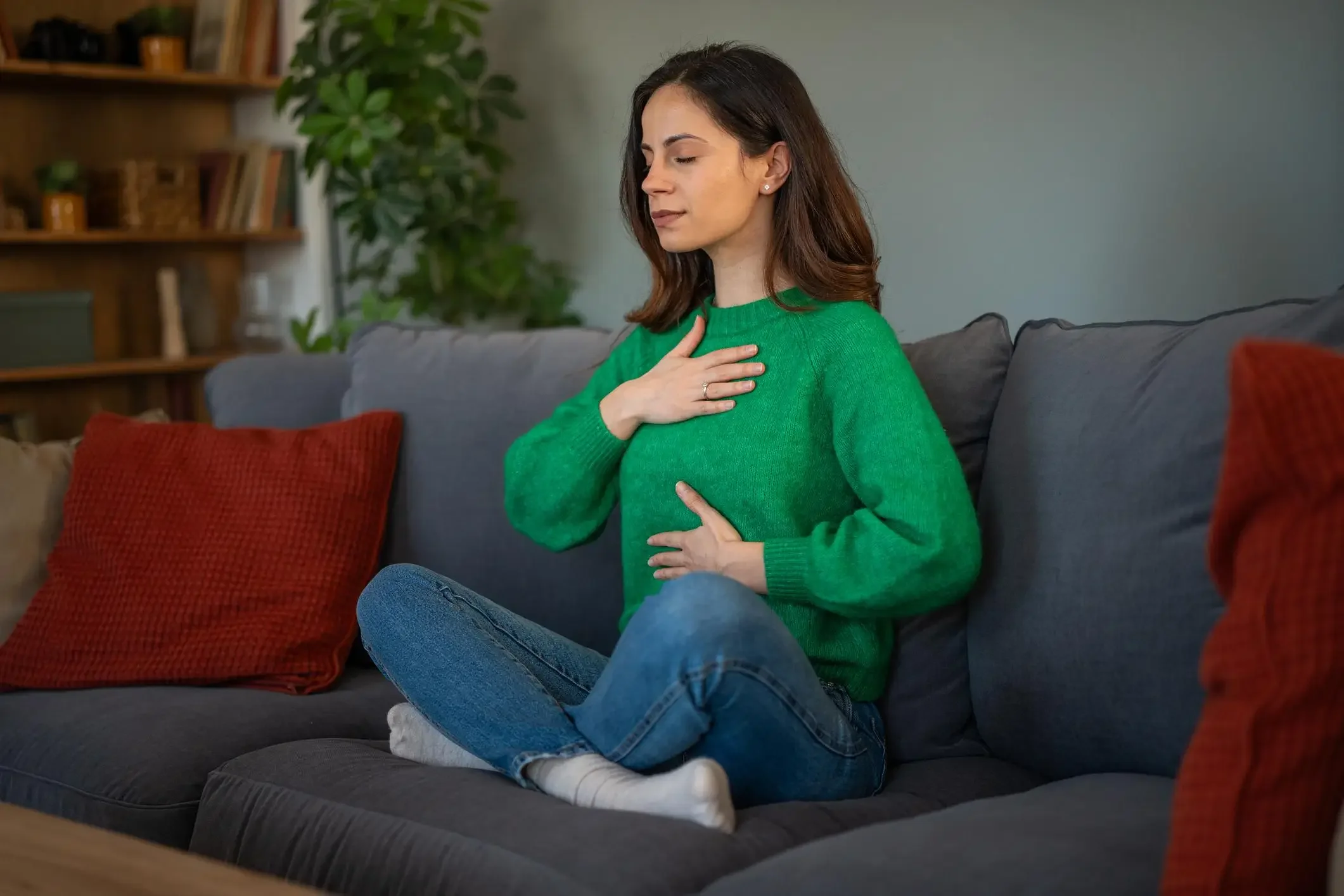
When you're living with chronic pelvic pain, you know how exhausting it can be—not just physically, but emotionally too. Pain causes stress and anxiety. Anxiety creates muscle tension. Tension makes pain worse. And the cycle continues.
Many of our customers tell us they struggle with this exact pattern. You're not alone, and you're not powerless.
While relaxation techniques won't cure chronic pain, research shows they can significantly reduce pain intensity, improve your ability to cope, and help with the anxiety and depression that often accompany chronic conditions. Best of all? These are tools YOU control—no prescription required, no appointment needed.
Understanding the Pain-Anxiety Connection
Here's what happens in your body when you're stressed or anxious:
Your sympathetic nervous system triggers the "fight or flight" response, releasing stress hormones like adrenaline and cortisol. This causes:
Increased muscle tension (especially in areas that already hurt)
Inflammation in the body
Heightened pain sensitivity
Difficulty sleeping
Racing thoughts and worry
The good news? Relaxation techniques activate your parasympathetic nervous system—your body's natural "brake pedal"—which reverses these effects.
Think of it this way: Your sympathetic system is the accelerator (stress, tension, pain), and your parasympathetic system is the brake (calm, relaxation, relief). Relaxation techniques help you apply those brakes.
6 Practical Relaxation Techniques You Can Try Today
You don't need special equipment or perfect conditions. Start with whatever feels most approachable, and remember: these are skills that improve with practice.
1. Diaphragmatic Breathing (Belly Breathing)
This is often the easiest place to start and can be done anywhere—sitting in traffic, lying in bed, or even during a flare-up.
How to do it:
Place one hand on your chest and one on your belly
Breathe in slowly through your nose, letting your belly push your hand out (your chest should move very little)
Breathe out slowly through your mouth
Take 5-10 slow, deep breaths
Focus on the rhythm and temperature of your breath
Why it works: Slow, deep breathing signals your body that you're safe, activating the relaxation response and reducing muscle tension.
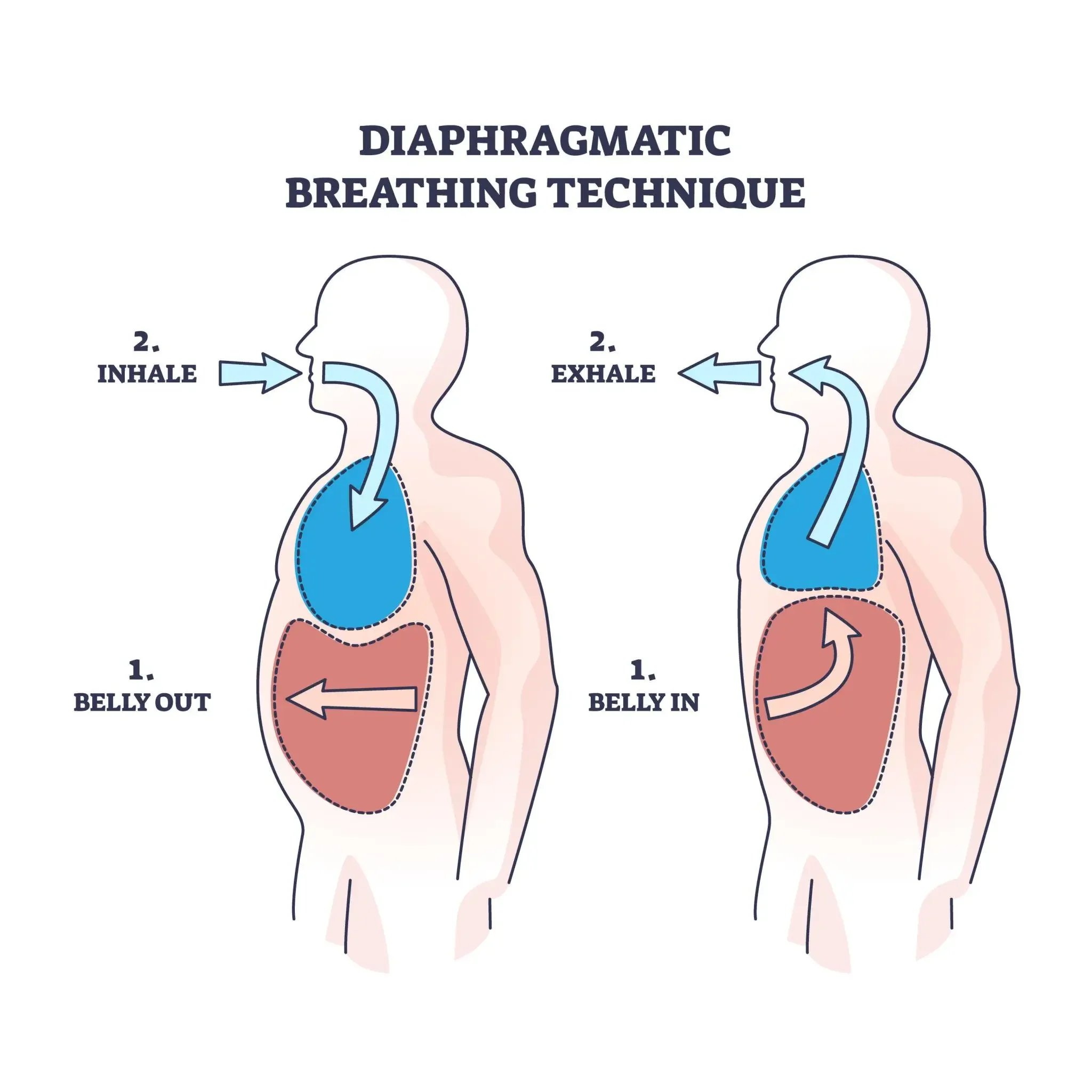
Place one hand on chest, one on belly - let your belly rise as you breathe
2. Progressive Muscle Relaxation (PMR)
This technique helps you become aware of tension you might not even realize you're holding—and teaches you how to release it.
How to do it:
Find a comfortable position (sitting or lying down)
Starting with your feet, tense the muscles for 5 seconds
Release and notice the difference between tension and relaxation
Move up through your body: calves, thighs, buttocks, abdomen, chest, arms, hands, shoulders, neck, face
Spend about 10-15 minutes total
Important: Be gentle with areas that are already painful. You don't need to create more discomfort—just enough tension to notice the contrast.
Why it works: Many people with chronic pain unconsciously tense muscles around the painful area, making things worse. PMR helps you recognize and release that tension.
3. Guided Imagery
Think of this as giving your mind a vacation from pain.
How to do it:
Close your eyes and picture a place where you feel completely safe and relaxed (a beach, a forest, a cozy room)
Engage all your senses: What do you see? Hear? Smell? Feel?
Stay in this mental space for 5-10 minutes
Notice how your body feels as you imagine this peaceful place
Why it works: Guided imagery provides powerful distraction from pain while calming your nervous system. Your brain can't fully focus on pain and peaceful imagery at the same time.
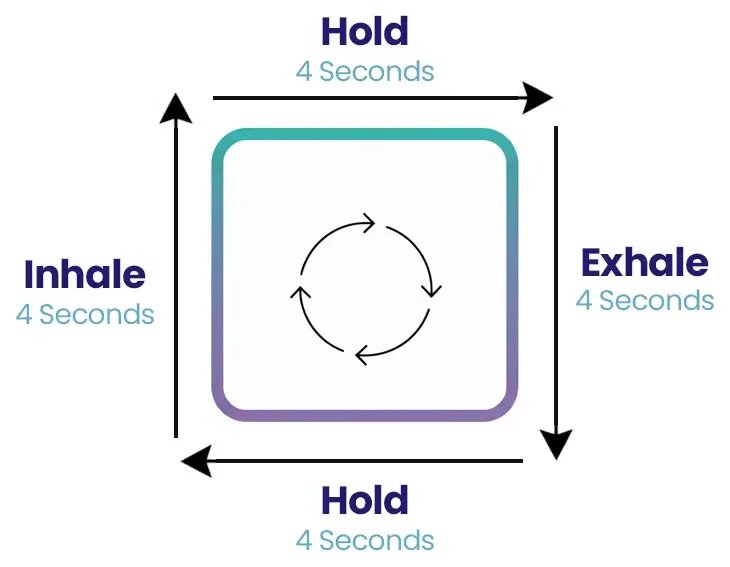
4. Square Breathing (Box Breathing)
This structured breathing technique is especially helpful during anxiety or pain spikes.
How to do it:
Breathe in for 4 counts
Hold for 4 counts
Breathe out for 4 counts
Hold for 4 counts
Repeat 4-5 times
Why it works: The counting gives your mind something to focus on besides pain, while the regulated breathing calms your nervous system.
5. Body Scan Meditation
This mindfulness practice helps you notice tension and consciously relax each part of your body.
How to do it:
Lie down or sit comfortably
Starting at your toes, mentally "scan" each body part
Notice any tension, pain, or sensation without judgment
Breathe into that area and imagine tension releasing
Move slowly up your entire body
Why it works: Body scans increase awareness of where you're holding tension and help you develop a more compassionate relationship with your body.
6. The "5-4-3-2-1" Grounding Technique
Perfect for moments of acute anxiety or panic.
How to do it:
Name 5 things you can see
Name 4 things you can touch
Name 3 things you can hear
Name 2 things you can smell
Name 1 thing you can taste
Why it works: This brings you back to the present moment and interrupts the anxiety spiral.
Making Relaxation Techniques Work for You
✓ Start small. Even 2-3 minutes of deep breathing can make a difference. Don't pressure yourself to do it "perfectly."
✓ Practice when you're NOT in crisis. The best time to learn these techniques is when your pain is moderate, not during a severe flare-up. Practice 2-3 times daily so they become automatic.
✓ Combine techniques. Many people find that pairing deep breathing with guided imagery, or doing progressive muscle relaxation followed by a body scan, works best.
✓ Create a relaxation space. Having a comfortable spot with proper support makes it easier to relax. This is where a proper cushion really helps—it's hard to relax when you're uncomfortable.
✓ Be patient with yourself. Relaxation is a skill. It takes practice, and some days will be easier than others.
When Relaxation Isn't Enough
While relaxation techniques are powerful tools, they work best as part of a comprehensive pain management plan. If you're experiencing severe anxiety, depression, or pain that significantly impacts your daily life, please reach out to:
A pelvic floor physical therapist (find one through our Provider Directory)
A pain psychologist or therapist specializing in chronic pain
Your primary care doctor or pain specialist
You deserve professional support, and asking for help is a sign of strength, not weakness.
Supporting Your Relaxation Practice
Here's something many people don't realize: it's nearly impossible to truly relax when you're sitting uncomfortably.
If you're trying to practice relaxation techniques but constantly shifting, adjusting, or feeling pressure on painful areas, your body stays in a low-level stress state. Proper sitting support removes that obstacle.
The Twin Cheeks Cushion creates a pressure-free zone for your pelvic floor, tailbone, and perineum—allowing your muscles to actually relax while you're sitting.
When your body isn't fighting against painful pressure, relaxation techniques become much more effective.
You Have More Control Than You Think
Living with chronic pain can feel overwhelming and isolating. The pain-anxiety-depression cycle is real, and it's exhausting.
But here's the truth: you have more power over this cycle than you might realize. Relaxation techniques give you tools to interrupt the pattern, reduce your pain's intensity, and improve your quality of life.
These aren't quick fixes or miracle cures. They're skills—and like any skill, they get better with practice.
Start today. Pick one technique from this list. Try it for just 5 minutes.
You might be surprised by how much better you feel.
With practice, relaxation techniques become powerful pain management tools
Quick Reference Guide: Which Technique When?
During a pain flare-up: Square breathing or 5-4-3-2-1 grounding
Having trouble falling asleep: Progressive muscle relaxation or body scan
Feeling anxious: Diaphragmatic breathing or square breathing
Need a mental break: Guided imagery
General daily practice: Any combination, 2-3 times per day
Stay ahead with the latest pelvic pain research, resources, and tips — delivered straight to your inbox.
This article is for informational purposes only and does not replace professional medical advice, diagnosis, or treatment. If you're experiencing severe anxiety, depression, or pain, please consult with a qualified healthcare provider.
About Cushion Your Assets: Founded by Trudy Jackson, who lived with chronic pelvic pain for 17 years, Cushion Your Assets makes patented, therapist-recommended cushions designed to assist in pelvic pain recovery. We also maintain a Provider Directory of 270+ pelvic health specialists to help you find care near you. All products are made and sourced in the USA.
