
If a long flight or a day in the car leaves you with a deep ache in your tailbone, a burning in your pelvis, or sit bones that feel bruised by the time you arrive, holiday travel can be something you dread more than look forward to. The seats are narrow and firm, the lines are long, and there's often no easy way to stand up when you need to.
For many people with pelvic pain, the trip to see family turns into hours of shifting in a seat, counting the minutes to the next stop, and needing a day to recover once they get there.
The good news is that a little planning goes a long way. Where you sit, what you sit on, and how often you move can all make the trip easier on your body.
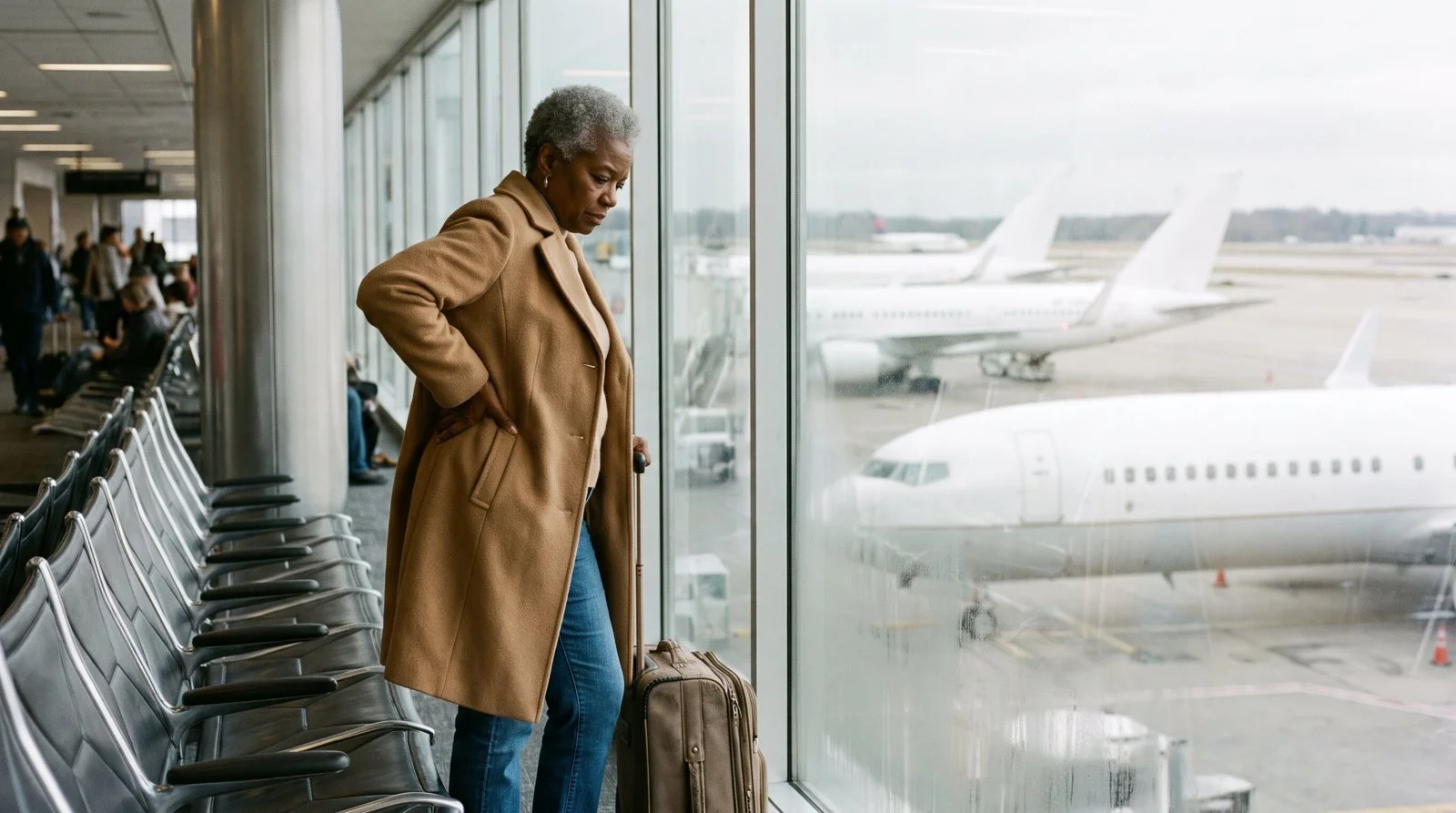
Why Travel Is Hard on Pelvic Pain
Travel stacks several of the things that tend to flare pelvic pain into one long day. You sit for hours in seats that weren't designed for comfort, often on firm foam that presses on the tailbone, sit bones, and perineum. On a plane, you may not be able to get up when you want to, and in a car, you're tied to the next exit.
Travel days also throw off your usual routines. Fiona McMahon, PT, DPT, a pelvic floor physical therapist at Beyond Basics Physical Therapy, writes that a big change in eating routines is one of the top reasons she sees people flare. Rushing out the door, skipping water to avoid restroom stops, and sleeping in an unfamiliar bed can all add up.
Constipation is part of this as well. Cleveland Clinic gastroenterologist Leyla Maric, MD, points to less water, less fiber, and holding in the urge to go as common reasons people get backed up when they travel. For anyone whose pain involves the pelvic floor, straining and a full bowel can make a sore area feel worse.
Before You Leave
A few things done ahead of time can make travel day calmer:
Pick your seat early. McMahon suggests an aisle seat or a seat near the restroom, so you can get up without climbing over anyone.
Plan your stops. On a road trip, map out rest areas along the way so a break is never more than an hour or so away.
Give yourself time in the morning. McMahon recommends at least an hour of unhurried time before you leave, including time for a bowel movement, so you aren't starting the day rushed and tense.
Pack the foods you tolerate. Bring snacks you know your body handles well, and include some fiber, such as fruit or whole-grain crackers.
Pack heat or cold if they help you. TSA allows gel ice packs through the checkpoint if they're frozen solid, and medically necessary packs are allowed in any state; tell the officer at screening. Check TSA's site for anything else you plan to carry on.
Keep your cushion with you. Put your seat cushion in your carry-on or personal item rather than your checked bag, so it's there at the gate, on the plane, and in the rental car.
Airplane Seat Cushion Tips
Airplane seats are firm and fixed in place, and you spend much of a flight leaning back. According to the Academy of Pelvic Health Physical Therapy, tailbone pain often gets worse when you lean back while sitting. An airplane seat cushion can change how that pressure lands, as long as it fits the seat and the way your body hurts.
When you choose a cushion for flying, look for one that:
Folds or packs small. It needs to fit in a carry-on or under the seat in front of you.
Fits a narrow seat. A cushion that hangs over the armrests or onto your neighbor's seat won't stay put.
Takes pressure off the area that hurts. For tailbone, perineal, or pelvic floor pain, that means a cushion with open space under those areas, rather than a flat pillow that simply softens the seat.
Stays in place. A non-slip bottom helps on slick upholstery when you shift around or stand up.
Doesn't need setup at your seat. Anything that needs inflating or adjusting each time is harder to manage in a tight row.
Once you're seated, scoot all the way to the back of the seat on your cushion, and keep your back supported. A rolled sweater or the airline pillow behind your lower back can help fill the gap between you and the seatback. If you forget your cushion, McMahon suggests folding a coat or sweatshirt to sit on as a backup.
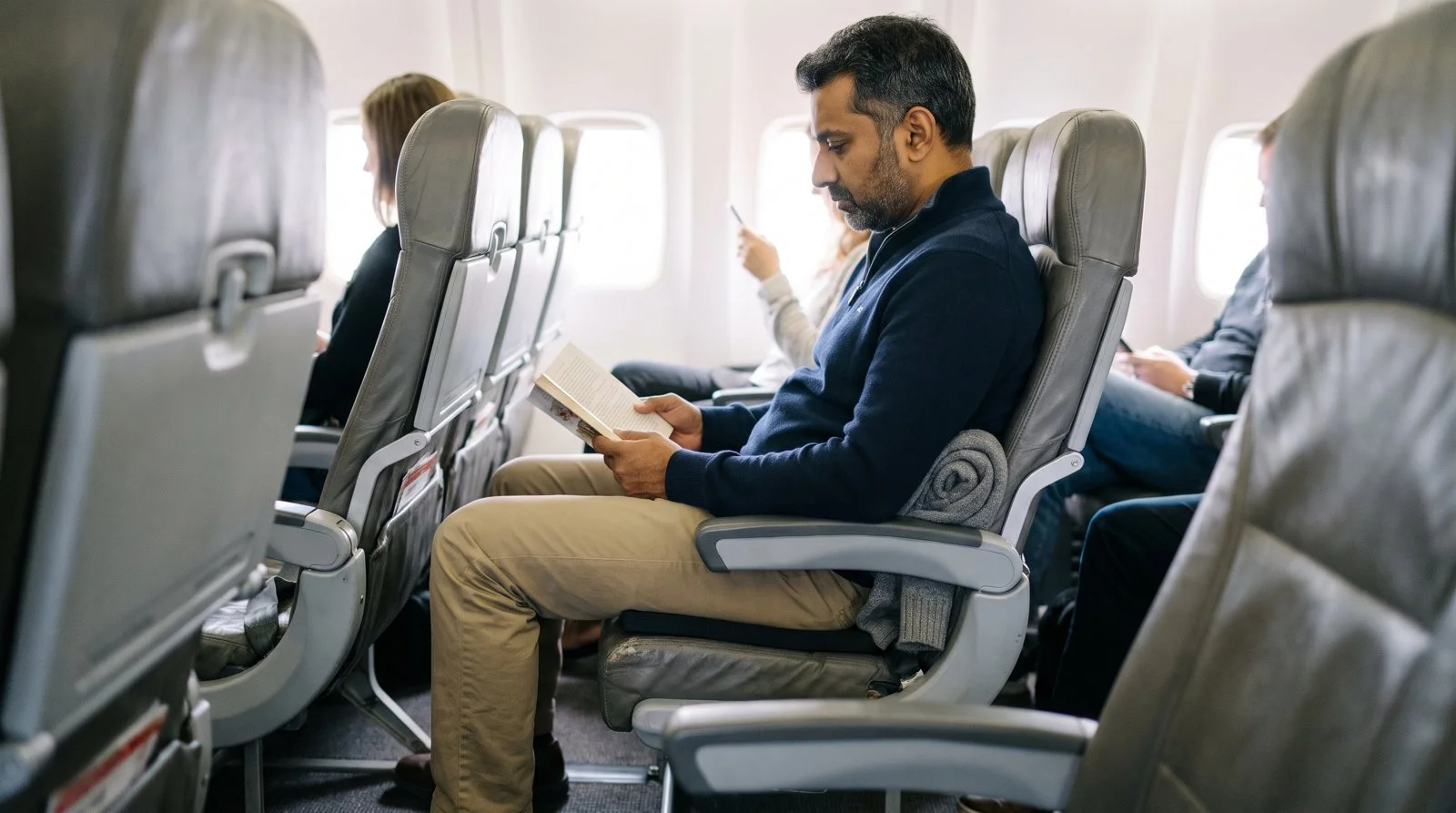
Move Often on the Plane
The CDC notes that anyone traveling more than four hours, whether by air, car, bus, or train, can be at risk for blood clots, and it recommends moving your legs often and working your calf muscles on long trips. Getting up also gives your pelvic floor a break from the pressure of sitting.
Walk the aisle when you can. When the seatbelt sign is off, stand up, walk to the back of the cabin, and stretch your legs.
Move in your seat. The CDC suggests stretching your legs out and flexing your ankles, pulling your toes toward you. Some airlines also suggest pulling each knee toward your chest and holding it for 15 seconds.
Keep drinking water. Bring an empty bottle through security and fill it at the gate. Dr. Maric calls water the most basic thing you can do to stay regular, especially when flying.
Go when you need to go. Dr. Maric advises against holding in a bowel movement, even if it means using a public restroom.
If you're at higher risk of blood clots, for example after recent surgery or a past clot, talk with your doctor before a long trip.
Road Trip Tips for Pelvic Pain
Driving brings its own challenges. You're sitting in one position for hours, often with your hips lower than your knees and your feet working the pedals.
Set up the seat before you leave. Hinge Health's physical therapists suggest a seat close enough to the pedals and a recline of about 100 to 110 degrees, plus the car's lumbar support or a rolled towel behind your lower back.
Empty your back pockets. Hinge Health notes that sitting on a wallet or phone can shift your hips out of alignment.
Stop about every hour. Hinge Health suggests a break every hour or so. Get out, walk around the rest area, and stretch your back and legs before you get back in.
Bring your cushion for the car. All Twin Cheeks thicknesses work in a car, so you can use the same cushion in the driver's seat, the passenger seat, and the plane.
Take turns driving. If someone else can drive, switching lets you shift positions and move more freely for a while.

Once You Arrive
The trip doesn't end when you get there. Holiday visits often mean dining chairs, folding chairs, couches that sink, and long meals at the table. Bring your cushion inside with you and use it at the table, on the couch, and in the car on the way to dinner.
Try to keep some of your daily routine, even on a short visit. Gentle stretching, a short walk after meals, and enough water help your body settle into a new place. If you rely on heat for your pain, a heating pad or a hot/cold pack you already know can make a guest room feel more manageable.
How a Cushion Can Help on the Go
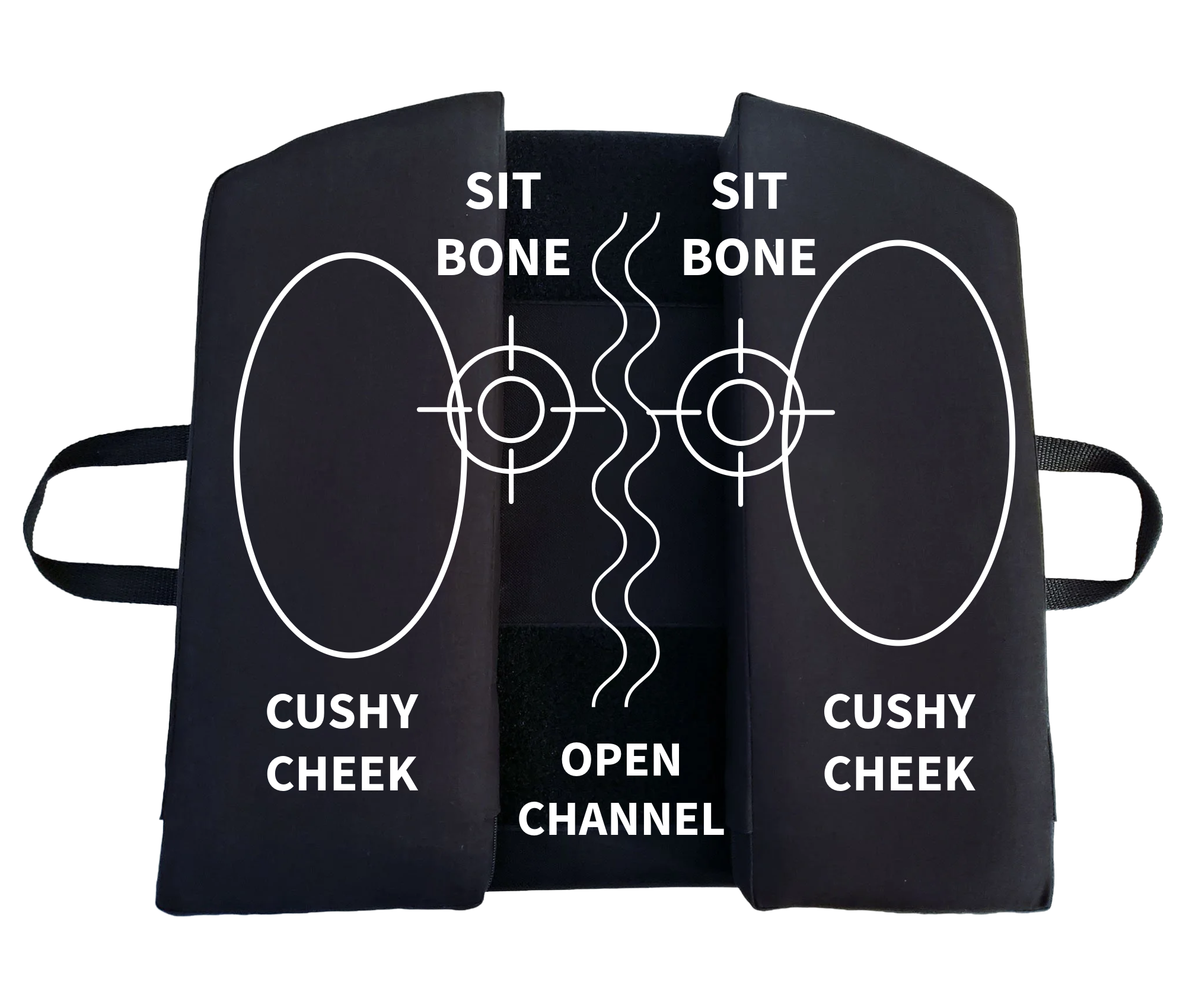
The Twin Cheeks cushion uses two independent foam panels with an open channel down the center. The panels carry your weight on the fleshy part of your buttocks, your sit bones rest just inside the channel, and your tailbone, perineum, and pelvic floor stay suspended in that channel. That redirects sitting pressure off sensitive areas, and many people find sitting more comfortable as a result.
For travel, the cushion folds and has two side handles, and the grippy bottom helps it stay put on most seats. The Low Profile version sits 1.5 inches off the seat and folds smaller, which some people prefer for flying or for seats where height is an issue. If you'd rather carry it flat, the Slipcover/Tote holds the cushion open and can stay on while you sit on it. The TheraFlex Hot/Cold Pack is a separate purchase that attaches down the center of the cushion.
The cushion is a supportive tool alongside treatment and doesn't treat the cause of your pain. Trudy Jackson designed it after living with chronic pelvic pain for 17 years, and her specialist later asked her to make them for his clinic.
If you're ordering before a trip, take the Find Your Fit quiz to match your size, firmness, and thickness. New foam starts firm and softens and settles in over about two weeks, and your body needs time to adjust to a new way of sitting too, so give yourself time to break it in at home before you travel. If it still doesn't feel right after two weeks and adjusting the panels, contact us.
Frequently Asked Questions
1. What is the best airplane seat cushion for pelvic pain?
Look for a cushion that folds small enough for your carry-on, fits a narrow seat, stays in place, and leaves open space under the tailbone, perineum, and pelvic floor rather than pressing on them. A flat pillow softens the seat but still puts weight on the areas that hurt.
2. Can I bring a seat cushion on a plane?
Check TSA's What Can I Bring? tool and your airline's carry-on size limits before you fly. Packing the cushion in your carry-on or personal item means you have it at the gate and on the plane.
3. How often should I get up on a long flight?
The CDC recommends moving your legs often on any trip longer than four hours. Walk the aisle when the seatbelt sign is off, and stretch your legs and ankles in your seat in between.
4. How can I make a long car ride easier with pelvic pain?
Adjust the seat before you leave, support your lower back, sit on a cushion that takes pressure off sensitive areas, and plan a stop about every hour to walk and stretch.
5. Why does my pelvic pain flare when I travel?
Long hours of sitting on firm seats, fewer chances to move, changes in what and when you eat, less water, and constipation can all add up on a travel day.
Moving Forward
Travel with pelvic pain takes more planning, but it doesn't have to mean dreading every trip. An aisle seat, regular breaks, water, and a cushion that travels with you can make the hours in transit easier, so you have more energy for the people you're going to see. If pain keeps limiting your travel, a pelvic floor physical therapist can help, and our Provider Directory lists 270+ pelvic health specialists.

Stay ahead with the latest pelvic pain research, resources, and tips — delivered straight to your inbox.

This article is for informational purposes only and does not replace professional medical advice, diagnosis, or treatment. Always consult qualified healthcare providers for personalized medical guidance.
About Cushion Your Assets:
Founded by Trudy Jackson, who lived with chronic pelvic pain for 17 years, Cushion Your Assets makes patented, therapist-recommended cushions designed to assist in pelvic pain recovery. We also maintain a Provider Directory of 270+ pelvic health specialists to help you find care near you. All products are made and sourced in the USA.
