
What Causes Sit Bone Pain and How to Sit More Comfortably
If you feel a deep ache or a sharp, bruised feeling right where your bottom meets the chair, and it gets worse the longer you sit, you may be dealing with sit bone pain. It can show up on one side or both, and some people feel it spread into the back of the thigh.
When your sit bones hurt, ordinary parts of the day turn into something to plan around: a long drive, a work meeting, a bike ride, or a dinner on hard restaurant chairs.
The good news is that most causes of sit bone pain are treatable, and changing how you sit can ease the pressure while you heal.

Where Are Your Sit Bones?
Your sit bones are the two rounded points of bone at the bottom of your pelvis. Their medical name is the ischial tuberosities, and you can feel them press into a hard seat when you sit up straight.
Several structures meet at that spot. Your hamstring muscles attach to the sit bones, and small fluid-filled sacs called bursae cushion them. Nerves also run close by, including the sciatic nerve on its way down the leg and the pudendal nerve, which supplies the pelvic floor. Because so much shares this small area, pain here can come from more than one source.
Common Causes of Sit Bone Pain
Ischial Bursitis
Ischial bursitis is inflammation of the bursae that cushion your sit bones. Cleveland Clinic describes the pain as a dull, deep ache that exercise or prolonged sitting can aggravate. The most common cause is repeated pressure or friction, and pressure comes mostly from sitting, especially on hard surfaces. The condition was once called "weaver's bottom" for that reason.
Desk work, driving, cycling, horseback riding, and long-distance hiking all raise the risk. According to Cleveland Clinic, most people recover from an acute case in a few weeks, though the pain can last as long as whatever is irritating the bursae continues.
High Hamstring Tendinopathy
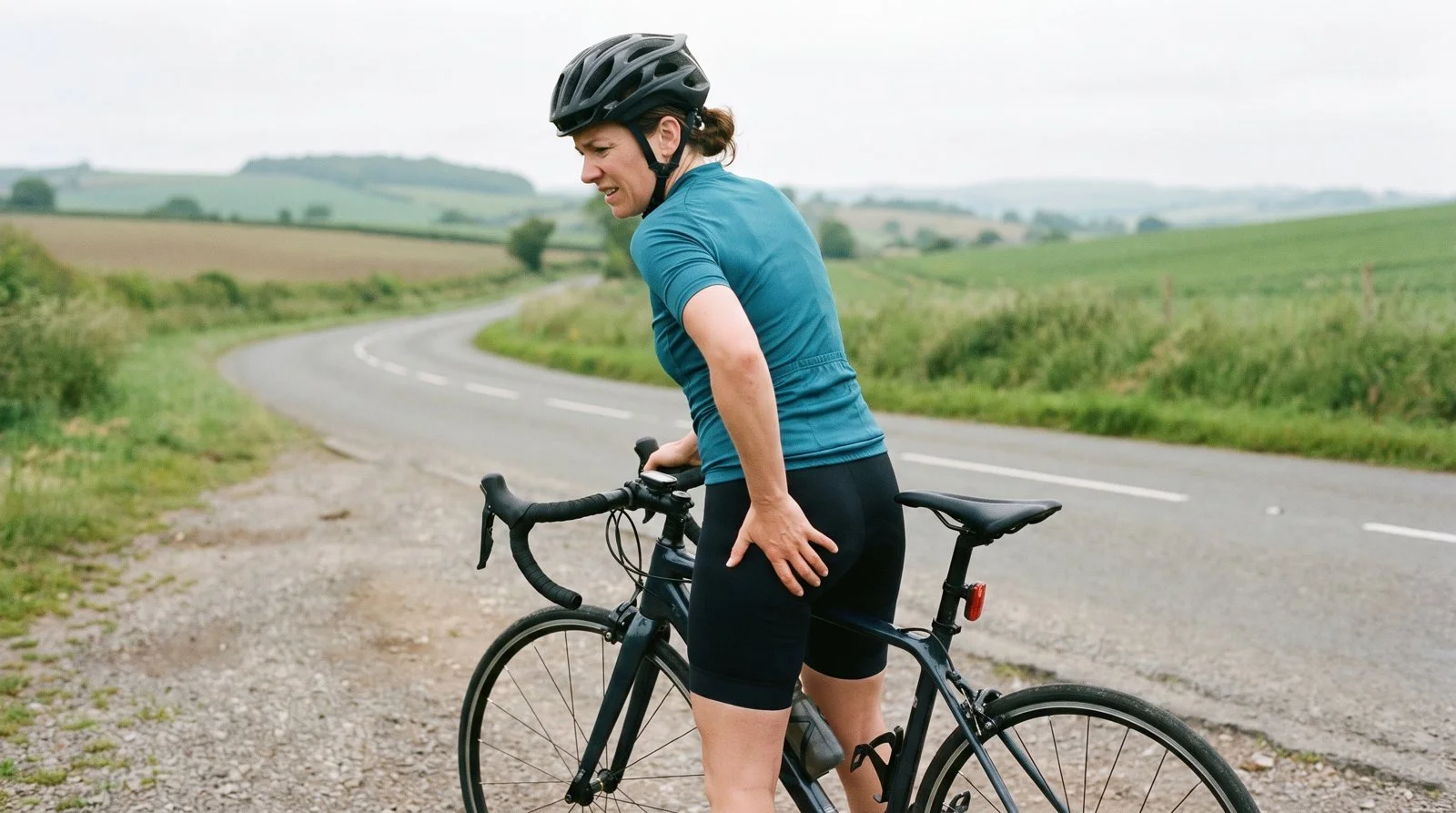
The hamstring tendons attach directly to the sit bones, and they can become irritated where they meet the bone. Sports medicine physician Dr. Adam Pourcho describes this as deep pain in the lower buttock that comes on gradually and gets worse with prolonged sitting. It can also hurt to bend at the waist, tie your shoes, or sprint.
A case report in the Journal of Orthopaedic & Sports Physical Therapy lists pain with prolonged sitting, mainly on hard surfaces, as a common symptom. The same report notes that this pain often travels down the back of the thigh, so it can be mistaken for sciatica. Dr. Pourcho notes that running, cycling, and hiking can make it worse.
Nerve Pain Near the Sit Bones
Nerve pain tends to feel different from a bruised ache. It is more often burning, tingling, shooting, or numb.
The pudendal nerve runs along the inside of the pelvis near the sit bones. When it is irritated, pain usually shows up in the genitals, perineum, or rectum and gets worse with sitting. Worsening with sitting is one of the five core criteria doctors use to diagnose pudendal neuralgia, known as the Nantes criteria. Our article on the best cushion for pudendal nerve pain explains more about this nerve.
Sciatic-type pain that runs from the buttock down the leg can come from a pinched nerve in the lower back, piriformis syndrome, or sacroiliac joint problems, as well as from the hamstring tendon. Tell your doctor about any pain that travels down your leg.
Is It Your Sit Bones or Your Tailbone?
Tailbone pain sits higher and in the center, at the very bottom of your spine, while sit bone pain sits lower and off to one or both sides. According to the Academy of Pelvic Health Physical Therapy, tailbone pain often gets worse when you lean back while sitting or rise from a chair. If the pain is in the middle, our article on coccydynia covers tailbone pain in detail.
When to See a Provider
Cleveland Clinic says most acute cases of ischial bursitis improve within a few weeks, and when they don't, another underlying condition may need treatment.
It's worth seeing a provider if your pain:
Has lasted more than a few weeks or keeps coming back
Travels down your leg or comes with burning, tingling, or numbness
Makes it hard to sit through work or sleep
Get care right away if the pain started suddenly while running, sprinting, or lifting, especially with a pop, heavy bruising or swelling, or trouble walking. Cleveland Clinic lists a pop as a sign of a more serious hamstring injury and advises seeing a provider right away if you can't walk and have a lot of swelling and bruising.
Diagnosis usually starts with a physical exam and questions about how the pain began. Imaging such as an MRI or ultrasound can help if the cause isn't clear. If sitting pain has followed you through several appointments without answers, our guide to finding a doctor for sitting pelvic pain and our Provider Directory of 270+ pelvic health specialists can help you find someone who looks at the whole picture.
What to Tell Your Doctor
A few notes before your appointment make the pain easier to pin down:
Exactly where it hurts, such as one sit bone, both, the center of the tailbone, or deeper in the pelvis
What it feels like, such as a dull ache, a bruise, burning, or tingling
Which seats and activities make it worse, such as the car, a hard chair, cycling, or bending forward
Whether it spreads down the back of your thigh
How long it has been going on and what you've already tried
What Helps Sit Bone Pain
Treatment depends on the cause, which is why a diagnosis matters. For bursitis and tendon irritation, care usually starts simple:
Rest from what aggravates it. Cut back on long sits, long rides, or hill running for a while, then return gradually.
Ice. Keep a barrier such as a towel or your pants between the ice pack and your skin.
Over-the-counter pain relievers. Ibuprofen or naproxen can ease inflammation if they're safe for you; check with your doctor or pharmacist first.
Physical therapy. Cleveland Clinic notes that physical therapy can stretch and strengthen the surrounding muscles to take stress off the bursae. For hamstring tendinopathy, eccentric strengthening is the most commonly accepted exercise approach, and a physical therapist can set the right starting level.
Injections. For more severe bursitis, a provider may offer a corticosteroid injection.
If tight pelvic floor muscles are part of your pain, release usually helps more than strengthening. Our article on pelvic floor physical therapy explains what a pelvic floor therapist can do.
Sitting Changes That Take Pressure Off
Treatment takes time, and you still have to sit. These habits can lower the load on your sit bones:
Change positions often. Get up and move regularly, or alternate between sitting and a standing desk.
Skip hard seats when you can. Hard chairs, bleachers, and wooden benches press directly on the sit bones.
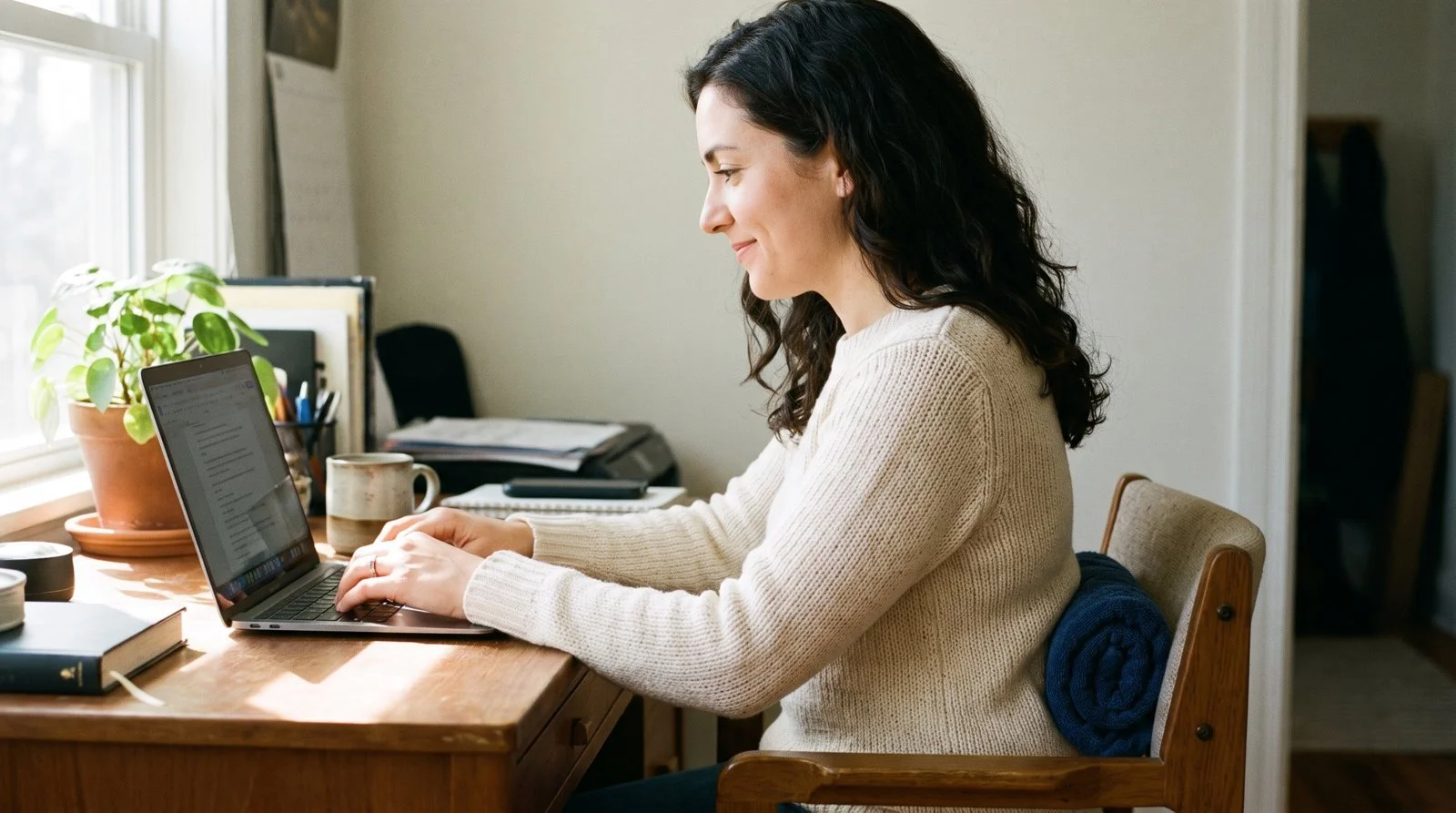
Support your lower back. Hinge Health's physical therapists suggest a rolled towel behind your lower back, which tips the pelvis slightly forward so less weight rests on the sit bones.
Put a small pillow under your thighs when you sit. Cleveland Clinic suggests this to take some pressure off the bursae over your sit bones.
Take weight off the bike seat. If you cycle, stand up on the pedals for short stretches during a ride so your sit bones get a break, and build your mileage back up gradually.
How a Cushion Can Help
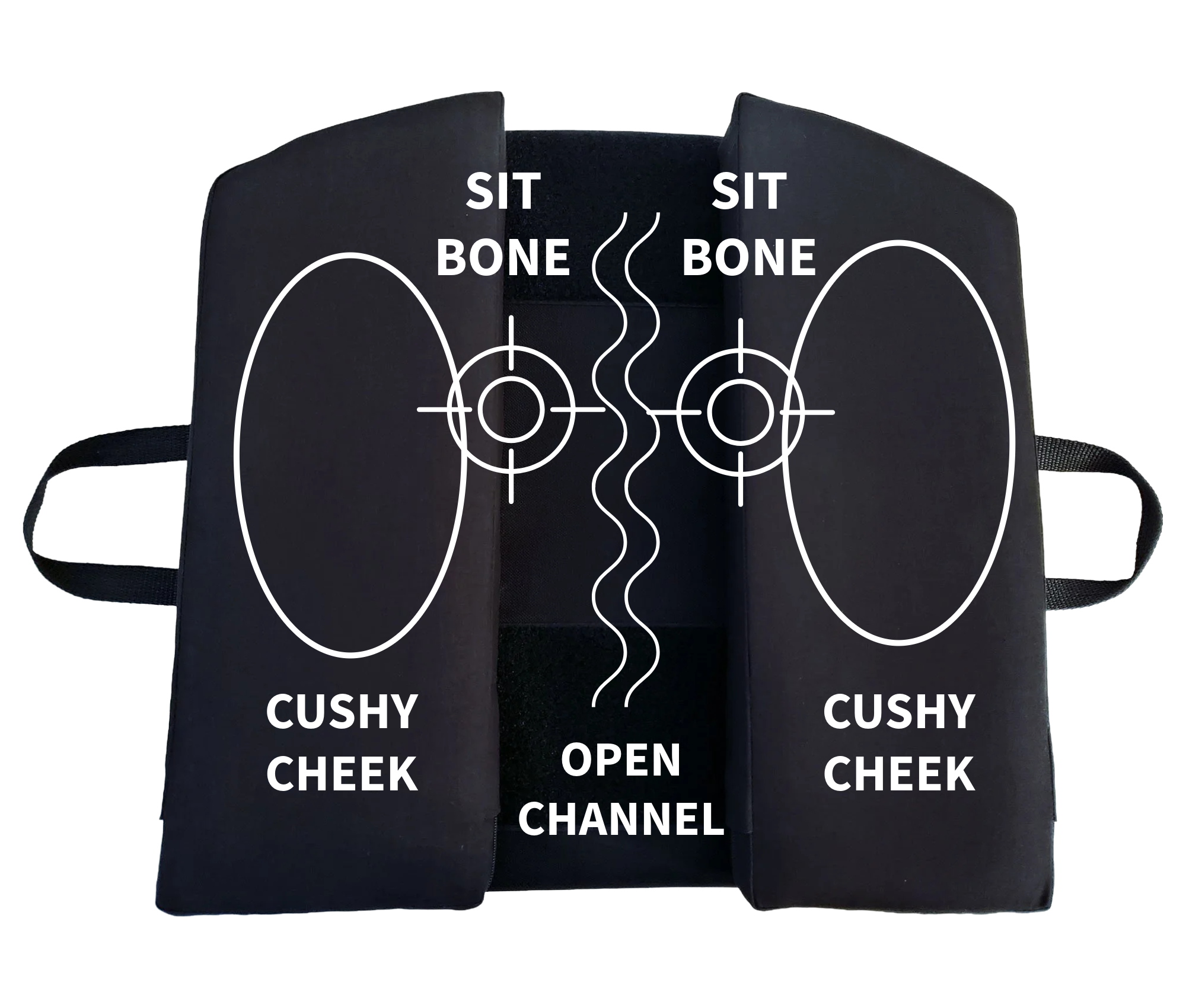
The Twin Cheeks cushion uses two independent foam panels with an open channel down the center. The panels carry your weight on the fleshy part of your buttocks, and your sit bones rest just inside the channel, so your weight isn't concentrated on those bony points. Your tailbone, perineum, and pelvic floor stay suspended in that channel too. That redirects sitting pressure off sensitive areas, and many people find sitting more comfortable as a result.
The Velcro-adjustable width lets you move the panels so your sit bones line up with the channel, and the cushion folds to come along in the car or to a ballgame. It works alongside treatment as a supportive tool and doesn't treat bursitis, tendinopathy, or nerve irritation itself.
Trudy Jackson designed it after living with chronic pelvic pain for 17 years, and her specialist later asked her to make them for his clinic.
Not sure which size or firmness you need? Take the Find Your Fit quiz to match your size, firmness, and thickness. New foam starts firm and softens with use over about two weeks, and your body needs time to adjust to a new way of sitting too. If it still doesn't feel right after two weeks and adjusting the panels, contact us.
Frequently Asked Questions
1. What causes sit bone pain?
The most common causes are ischial bursitis, which is inflammation of the cushioning sacs over the sit bones, and high hamstring tendinopathy, which is irritation where the hamstring tendons attach. Nerve irritation and problems in the lower back or hip can also cause pain in this area.
2. Why do my sit bones hurt when I sit?
Sitting puts your body weight directly onto the sit bones and the tissue around them. Hard seats and long stretches without a break add pressure to an area that is already irritated.
3. How long does sit bone pain last?
An acute case of ischial bursitis often improves within a few weeks. Tendon pain can take longer and usually needs a gradual strengthening plan. Pain that isn't improving is worth having checked.
4. What is ischial bursitis?
Ischial bursitis is inflammation of the small fluid-filled sacs that cushion the sit bones. It usually comes from repeated pressure or friction, most often from sitting on hard surfaces.
5. What is the best way to sit with sit bone pain?
Avoid hard seats, take frequent breaks, support your lower back, and use a cushion that takes weight off the sit bones.
Moving Forward
Sit bone pain is usually treatable, and it's worth raising with a provider if it hangs on longer than a few weeks. Knowing what's behind it, easing back on what aggravates it, and changing how you sit can all work together while you heal.

Stay ahead with the latest pelvic pain research, resources, and tips — delivered straight to your inbox.

This article is for informational purposes only and does not replace professional medical advice, diagnosis, or treatment. Always consult qualified healthcare providers for personalized medical guidance.
About Cushion Your Assets:
Founded by Trudy Jackson, who lived with chronic pelvic pain for 17 years, Cushion Your Assets makes patented, therapist-recommended cushions designed to assist in pelvic pain recovery. We also maintain a Provider Directory of 270+ pelvic health specialists to help you find care near you. All products are made and sourced in the USA.
