
If sitting through a workday, a drive, or a family dinner hurts, and you still have money in a flexible spending account (FSA) or health savings account (HSA), you may be wondering whether a seat cushion counts as a medical expense. It's a fair question, especially near the end of the year, when FSA deadlines start to come up.
Pelvic pain, tailbone pain, and nerve pain can make a hard chair feel like a problem to solve every single day. The good news is that many people use their HSA or FSA to pay for a therapeutic cushion, and a few questions to your plan before you order can save you a surprise at checkout.

The Short Answer
Many people do use their HSA or FSA for a seat cushion. Check with your plan first, since some ask for a note from your doctor.
At Cushion Your Assets, we hear from customers both ways. Some pay with their FSA or HSA card with no trouble, and for others the card doesn't go through. Each plan reviews these purchases its own way, so your plan is the one place that can give you a firm answer.
What Makes Something HSA or FSA Eligible
Both accounts pay for qualified medical expenses, which follow the IRS definition of medical care. According to IRS Publication 502, medical care expenses "must be primarily to alleviate or prevent a physical or mental disability or illness." The same publication says they don't include things that are "merely beneficial to general health," such as vitamins or a vacation.
That's why a seat cushion can land in a gray area. A cushion bought to ease pain from a condition like pudendal nerve pain, coccydynia, or chronic prostatitis is bought for a medical reason. A plan reviewer, though, may see "seat cushion" on a purchase and want more information before approving it. A short note from your doctor or physical therapist explaining why you need it often answers that question.
HSA vs. FSA: Which Money Expires
The two accounts handle leftover money differently, and that changes how much of a rush you're in.
HSA money belongs to you and stays with you. IRS Publication 969 explains that the contributions "remain in your account until you use them," and leftover money carries over to the next year. There's no year-end deadline to spend it.
An FSA usually works on a use-it-or-lose-it basis. If money is left at the end of the plan year, HealthCare.gov explains that an employer can offer one of two options, but not both: a grace period of up to 2½ extra months to spend it, or a carryover of part of the balance into the next plan year. For plan years starting in 2026, the IRS set the maximum carryover at $680. Some plans offer neither, so check your plan's deadline before you count on extra time.
If your plan year ends December 31, December is your last chance to use this year's FSA money.

Questions to Ask Your Plan Before You Order
A quick call or message to your plan administrator can tell you exactly what to expect. These are the questions worth asking:
Is a therapeutic seat cushion an eligible expense? Ask about the cushion itself, and mention the condition it's for.
Do I need a note from my doctor? Some plans ask for a letter of medical necessity for items that could also be used for everyday comfort. If yours does, ask what the note needs to say.
Will my card work at checkout, or do I file a claim? If your card is declined, ask whether you can pay another way and submit the purchase for reimbursement afterward.
What's my deadline? Find out when your plan year ends and whether you have a grace period or carryover.
What records should I keep? IRS Publication 969 says HSA owners need to keep records showing the money was used for qualified medical expenses. Save your order confirmation email and any note from your doctor in the same place.
Talk With Your Provider
If your plan asks for a note, the person who knows your pain best is the one to write it, whether that's your doctor, a pelvic floor physical therapist, or a pain specialist. Many pelvic pain specialists include a cushion as part of a treatment plan, so the request may not be new to them.
A cushion is a supportive tool that works alongside treatment like pelvic floor physical therapy, which is often the first place to start for pelvic pain. If you're still looking for care, our Provider Directory lists 270+ pelvic health specialists, and our guide to finding a doctor for sitting pelvic pain walks through who to see and what to ask.
What to Look For in a Cushion for Pelvic Pain
Whatever you pay with, the cushion has to work for your body. A soft pillow or a cushion that just pads the seat can leave pressure right where it hurts. Look for one that redirects your weight off the tailbone, perineum, and pelvic floor, comes in firmness levels matched to your weight, and is adjustable, since no two bodies sit the same way.
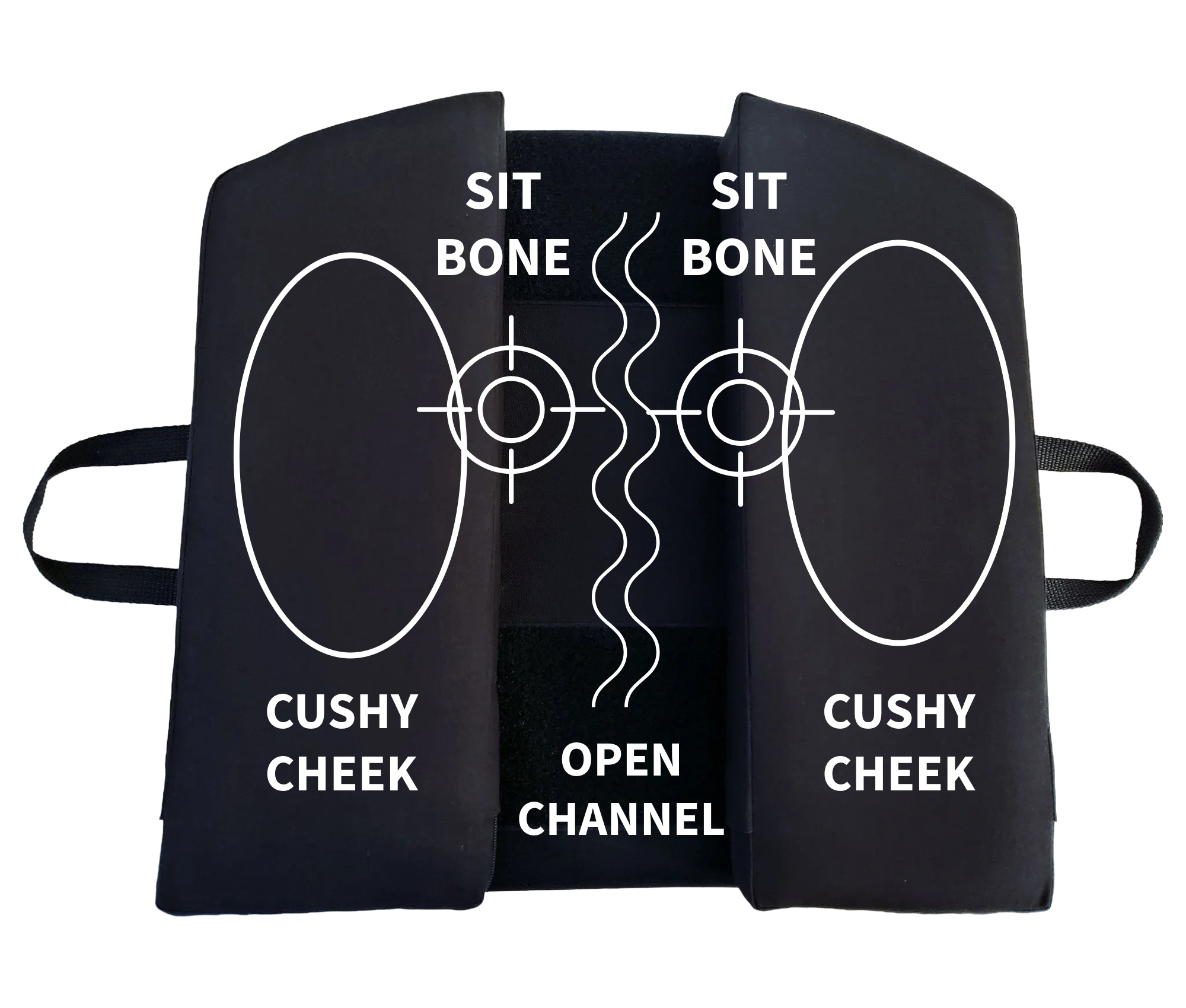
The Twin Cheeks Folding Cushion uses two independent foam panels with an open channel down the center. The panels carry your weight on the fleshy part of the buttocks, your sit bones rest just inside the channel, and the tailbone, perineum, and pelvic floor stay suspended in the open space. The panels attach with Velcro, so you can move them closer together or further apart until the fit feels right.
If your pain is only at the front, in the bladder, urethra, or vaginal area, the Simple Soother offers central support without a tailbone gap. Anyone with tailbone, sit bone, or rectal pain needs the Twin Cheeks.
Not sure which size, firmness, or thickness fits you? The Find Your Fit quiz walks you through it, and our guide to choosing a seat cushion explains what each option does. Both are worth doing before you order, so your HSA or FSA money goes to the cushion that fits.
Frequently Asked Questions
1. Can I use my HSA to buy a seat cushion?
Many people do. HSA money pays for qualified medical expenses, and a cushion bought to ease pain from a medical condition may qualify. Check with your plan first, since some ask for a note from your doctor.
2. Do I need a letter of medical necessity?
That depends on your plan: some approve a therapeutic cushion on its own, and others ask for a note from your doctor or physical therapist explaining why you need it. Ask your plan before you order.
3. What if my FSA card is declined at checkout?
Ask your plan whether you can pay another way and submit the purchase as a claim for reimbursement. Keep your order confirmation and any note from your doctor together in case your plan asks for them.
4. Does my HSA or FSA money expire at the end of the year?
HSA money doesn't expire; it carries over from year to year. FSA money usually has to be used by the end of the plan year, though some plans offer a grace period of up to 2½ months or a carryover of up to $680 for 2026 plan years. Your plan can tell you which applies to you.
Moving Forward
If you have money set aside for health costs, using it on something that makes sitting easier every day is a practical choice. Ask your plan your questions, get a note from your provider if you need one, and take the quiz so you order the right fit the first time.
A cushion won't treat the cause of your pain, but taking pressure off sore areas can make a workday, a drive, or a long dinner with people you love a lot more manageable.

For more ways to sit comfortably and care for your pelvic health, join our community below.
Stay ahead with the latest pelvic pain research, resources, and tips — delivered straight to your inbox.

This article is for informational purposes only and does not replace professional medical advice, diagnosis, or treatment. Always consult qualified healthcare providers for personalized medical guidance.
About Cushion Your Assets:
Founded by Trudy Jackson, who lived with chronic pelvic pain for 17 years, Cushion Your Assets makes patented, therapist-recommended cushions designed to assist in pelvic pain recovery. We also maintain a Provider Directory of 270+ pelvic health specialists to help you find care near you. All products are made and sourced in the USA.
