
If you feel burning, stinging, or a raw, throbbing ache around the opening of your vagina, and it gets worse the longer you sit, you may be dealing with vulvodynia. The vulva usually looks normal on an exam, so you may have spent months wondering whether the pain is real.
Vulvodynia can turn ordinary parts of the day into hard ones, like a workday at a desk, a long drive, or dinner at a restaurant with hard chairs. The good news is that there are practical ways to take pressure off a sore vulva, and how you sit is one of the easiest places to start.
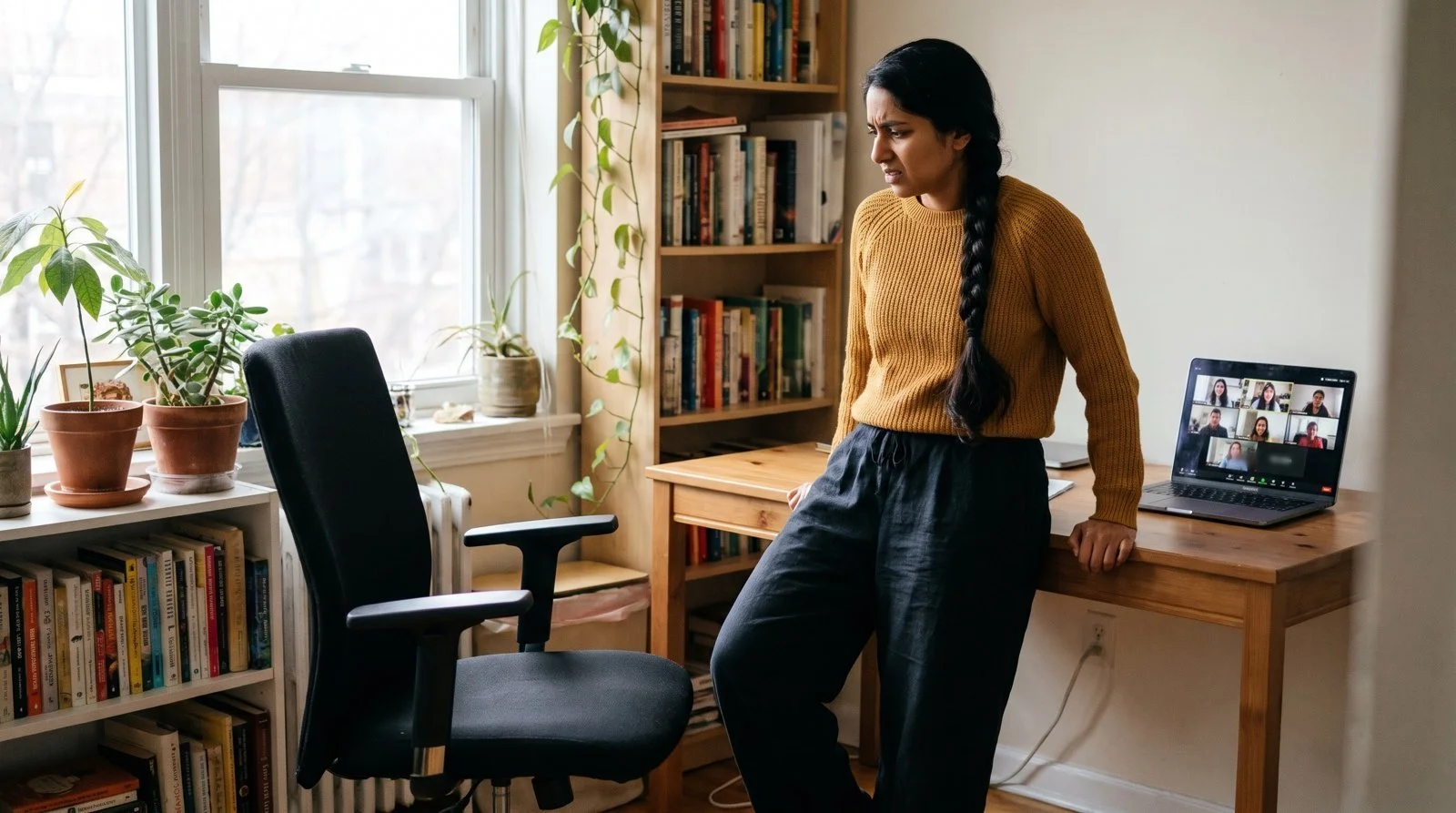
What Vulvodynia Is
Vulvodynia is pain in the vulva, the area around the outside of the vagina, that lasts at least three months without another clear cause. The NHS describes the pain as burning, throbbing, stabbing, or sore. It can affect all or part of the vulva, can be constant or come and go, and can spread to the inner thighs, around the anus, or to the urethra. The vulva usually looks normal.
The National Vulvodynia Association describes two main patterns. In localized vulvodynia, the pain is in one area. When that area is the vestibule, the tissue just around the vaginal opening, it's called vestibulodynia, and provoked vestibulodynia (pain when the area is touched or pressed) is the most common form. In generalized vulvodynia, the pain is spread out and fairly constant, with some periods of relief.
According to Cleveland Clinic, the exact cause is unknown. Possible contributors include inflammation, hormonal and genetic factors, nerve injury, past vaginal infections, irritation from harsh products, and pelvic floor muscle spasms. Cleveland Clinic also notes that vulvodynia often shows up alongside other pain conditions, such as painful bladder syndrome, irritable bowel syndrome, and fibromyalgia, and that it often gets misdiagnosed or missed.
Why Sitting Makes Vulvodynia Worse
When you sit, your body weight presses down through the pelvis and into the seat. For someone with vulvodynia, that pressure lands right on tissue that is already sensitive. The National Vulvodynia Association lists prolonged sitting among the activities that put pressure on the vulva and typically make symptoms worse, along with sex and fitted pants. Cleveland Clinic includes sitting in its list of things that can trigger the pain.
Hard or narrow seats, long car rides, and bike seats press on the area even more. Tight jeans or leggings can add friction and pressure on top of that. If your pelvic floor muscles are also tense, which Cleveland Clinic lists as a possible contributor, hours of sitting can leave the whole area sore by the end of the day.
Everyday Changes That Can Help
Small changes to how and where you sit can lower the pressure on your vulva over a full day:
Break up long stretches of sitting. The NHS advises against sitting in the same position for long periods, and the National Vulvodynia Association suggests alternating sitting with periods of standing if you sit most of the day at work.
Sit on a cushion that takes pressure off the vulva. Cleveland Clinic recommends a foam "donut" or another type of cushion that reduces pressure on the vulva when you need to sit for a long time.
Wear loose, cotton clothing. Cleveland Clinic suggests all-cotton underwear and avoiding tight pantyhose, pants, and jeans. The NHS also recommends loose cotton underwear.
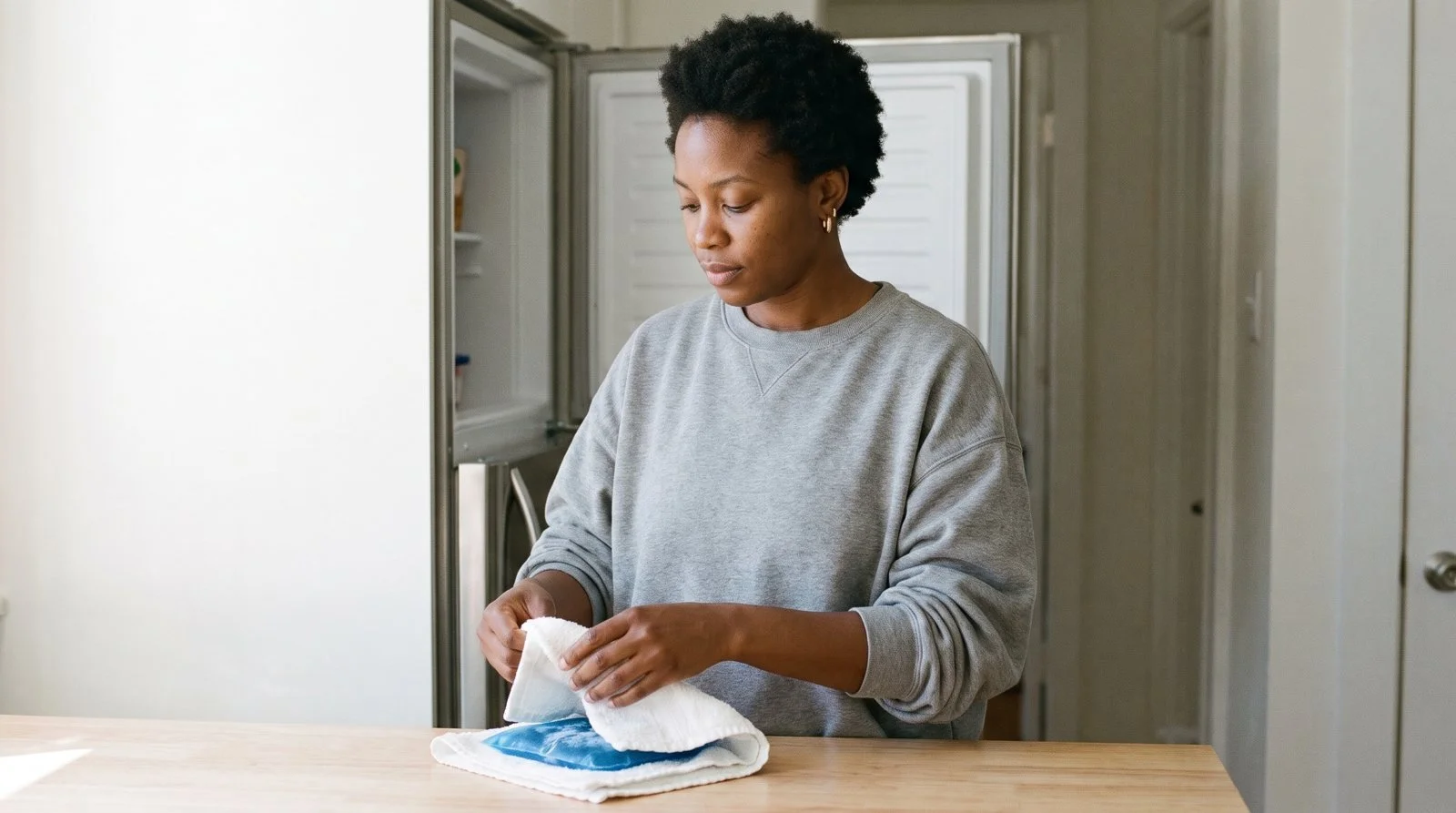
Use cool, not hot. Cleveland Clinic suggests cold compresses or gel packs for no more than 15 minutes at a time, and the National Vulvodynia Association suggests wrapping the pack in a hand towel. The NHS recommends cool or lukewarm water instead of hot baths.
Skip the bike seat for now. Both Cleveland Clinic and the National Vulvodynia Association suggest avoiding cycling, and Cleveland Clinic adds horseback riding, since both put direct pressure on the vulva.
Keep products gentle. The NHS advises against scented soaps and douching, and Cleveland Clinic recommends mild, unscented soap and unscented laundry detergent.
What to Look For in a Cushion for Vulvodynia
A regular chair pad or pillow softens the seat, but your weight still rests on the same spot. For vulvodynia, the goal is to move pressure off the vulva and onto areas that can handle it. When you compare cushions, these features are worth checking:
Open space under the vulva. The center of the cushion should leave the front of the pelvis free instead of pressing into it.
Support under the buttocks and thighs. Your weight should rest on the fleshy parts of your buttocks and thighs.
Firm enough to hold its shape. A soft cushion can flatten under you and close up the open space.
A size that fits your seat. A cushion that hangs over the edge of the chair or slides around won't stay where you need it.
Easy to carry. A cushion you can take to the car, the office, and a restaurant will get more use.

Choosing Between the Simple Soother and Twin Cheeks
Cushion Your Assets makes two cushions with open space in the center, and the right one depends on where you hurt.
The Simple Soother has 3" of supportive foam with an oval cutout down the center, 10" long and 4.5" wide. It's made for pain in the central area, including vulvodynia, and it isn't the right choice for tailbone or nerve pain, since it has no open space at the back for the tailbone.
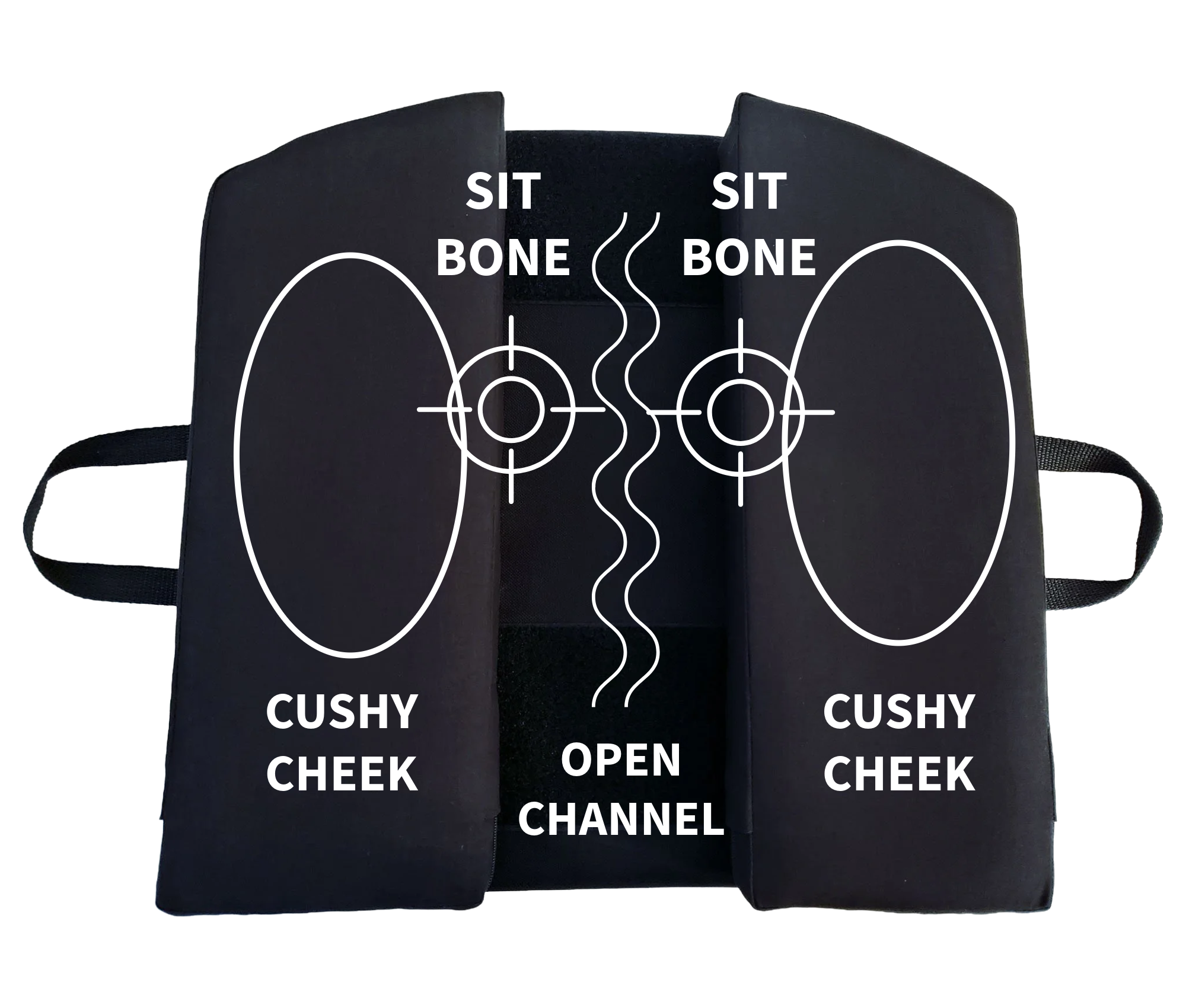
The Twin Cheeks Folding Cushion uses two independent foam panels with an open channel down the center, running front to back. The panels carry your weight on the fleshy part of your buttocks, your sit bones rest just inside the channel, and your tailbone, perineum, and pelvic floor stay suspended in that channel. If your vulvar pain comes with tailbone pain, sit bone pain, or nerve pain such as pudendal neuralgia, Twin Cheeks is the better fit. The panels attach with Velcro, so you can move them closer together, further apart, or into a "V," and the cushion folds to go with you.
Neither cushion treats vulvodynia. They're supportive tools that redirect sitting pressure off sensitive areas alongside your care, and many people find sitting more comfortable with one. If you're not sure which one fits your body, the Find Your Fit quiz recommends a cushion, size, firmness, and thickness. New foam starts firm on purpose and softens and settles in over about two weeks, and your body needs time to adjust to a new way of sitting too. If it still doesn't feel right after two weeks, contact us.
Treatment Options Worth Asking About
The NHS says no single treatment works for everyone, and care often involves more than one specialist, such as a gynecologist, a physiotherapist, a psychologist, and a pain specialist. A cushion can make sitting easier while you and your providers work on the pain itself.
Pelvic floor physical therapy has some of the strongest evidence. Cleveland Clinic explains that it can loosen tension in the pelvic floor muscles and reduce involuntary spasms. In a randomized trial of 212 women with provoked vestibulodynia, published in the American Journal of Obstetrics and Gynecology in 2021, 79% of the women who had 10 weeks of physical therapy said they were much or very much improved, compared with 39% of those who used a numbing ointment. Physical therapy in that study included education, pelvic floor exercises with biofeedback, manual therapy, and dilators. You can read more about what to expect in our guide to pelvic floor physical therapy.
Other options the NHS and Cleveland Clinic list include:
Numbing or nerve-calming creams
Medicines for nerve pain
Nerve blocks
Counseling, cognitive behavioral therapy (CBT), or sex therapy
Surgery to remove the painful tissue, occasionally offered for localized pain when other treatments haven't helped
Stress can make any chronic pain harder to live with, and the NHS suggests yoga and mindfulness. Our post on relaxation techniques for chronic pain has some gentle places to start.
When to See a Provider
The NHS recommends seeing a doctor if you have vulvar pain or discomfort that doesn't go away or keeps coming back, if tampons are hard to insert because of pain, or if sex is painful with burning or stinging. You can ask for a female doctor and bring someone with you.
If you've been told your exam looks normal and nothing more is offered, a provider who focuses on pelvic pain can help. Our Provider Directory lists 270+ pelvic health specialists, and How to Find the Right Healthcare Provider for Chronic Pelvic Pain walks through what to look for.
Frequently Asked Questions
1. Why does vulvodynia hurt more when I sit?
Sitting puts your body weight on the vulva and the tissue around it. The National Vulvodynia Association lists prolonged sitting as one of the activities that typically makes symptoms worse.
2. What kind of cushion helps vulvodynia?
Cleveland Clinic recommends a foam donut or another cushion that reduces pressure on the vulva. Look for open space under the front of the pelvis, support under the buttocks and thighs, and foam firm enough to hold its shape.
3. Is the Simple Soother or Twin Cheeks better for vulvodynia?
The Simple Soother is made for central pain like vulvodynia. If you also have tailbone, sit bone, or nerve pain, Twin Cheeks is the better choice. The Find Your Fit quiz can help you decide.
4. Can pelvic floor physical therapy help vulvodynia?
The research is strongest for provoked vestibulodynia. In a randomized trial of 212 women with that form, 79% of those who had physical therapy reported being much or very much improved, compared with 39% who used a numbing ointment.
5. Should I stop riding my bike?
Cleveland Clinic and the National Vulvodynia Association both suggest avoiding cycling, since a bike seat presses directly on the vulva. Ask your provider or physical therapist when it makes sense to try it again.
Moving Forward
Vulvodynia is real pain, even when an exam looks normal, and it can take time and more than one provider to find what helps. In the meantime, taking pressure off your vulva when you sit, breaking up long stretches in a chair, and choosing gentle clothes and products can make each day easier. Pelvic floor physical therapy and the right care team give you more to work with over time.

Stay ahead with the latest pelvic pain research, resources, and tips — delivered straight to your inbox.

This article is for informational purposes only and does not replace professional medical advice, diagnosis, or treatment. Always consult qualified healthcare providers for personalized medical guidance.
About Cushion Your Assets:
Founded by Trudy Jackson, who lived with chronic pelvic pain for 17 years, Cushion Your Assets makes patented, therapist-recommended cushions designed to assist in pelvic pain recovery. We also maintain a Provider Directory of 270+ pelvic health specialists to help you find care near you. All products are made and sourced in the USA.
