
Setup Guide: How to Use the Twin Cheeks Cushion for Pelvic Pain
Your Twin Cheeks cushion has arrived, and a few minutes of setup will make a real difference in how it feels. This guide walks you through everything in the package insert, from finding your fit to what to expect in the first two weeks, so you have it all in one place if the insert goes missing.
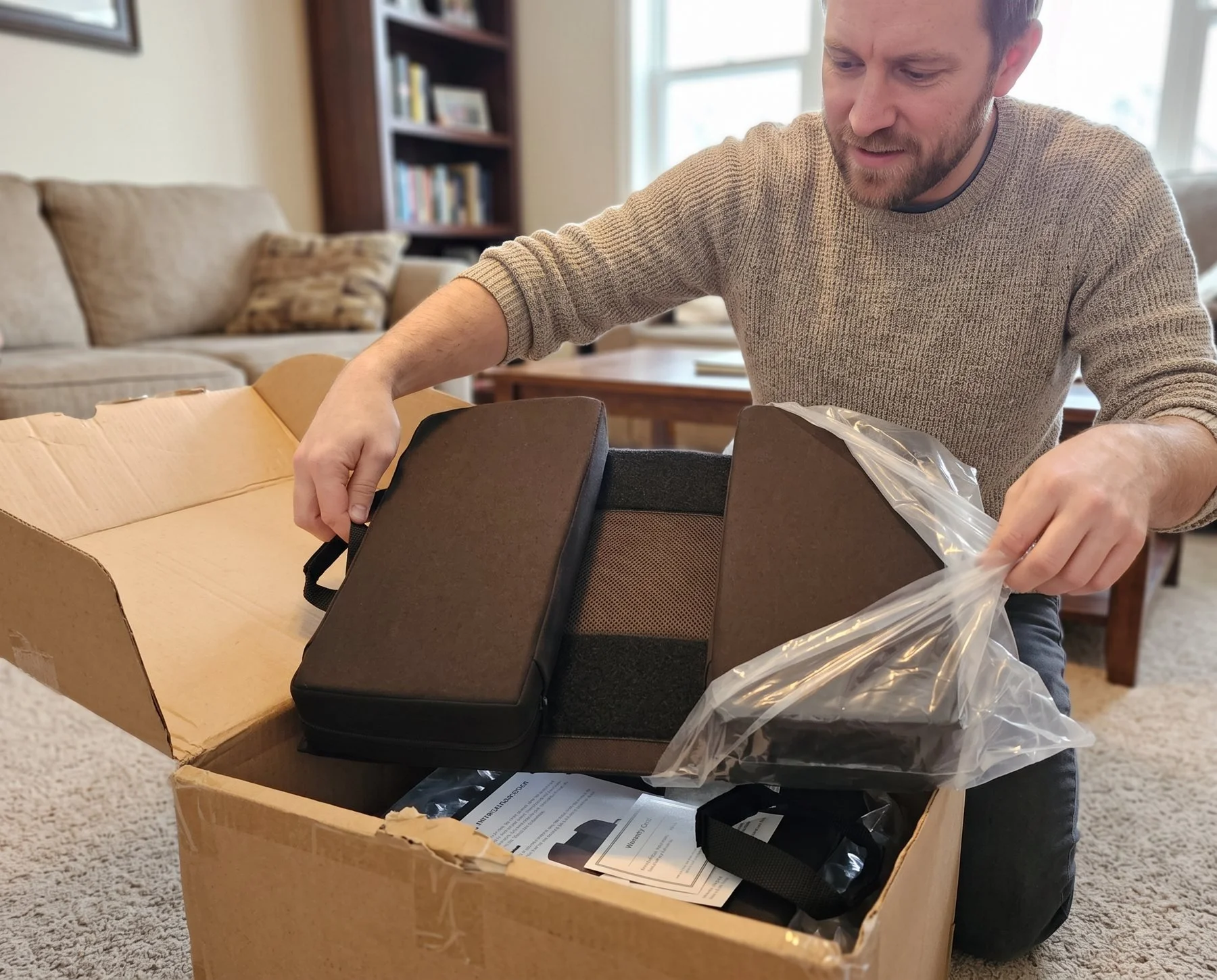
What to Do When Your Cushion Arrives
Take the cushion out of the packaging and look it over. You'll see a base with two separate foam panels attached to it with heavy-duty Velcro, an open channel running down the middle between them, and a carrying handle on each side. One edge of the base is rounded, and that edge goes toward the back of your chair.
If the package sat in a cold truck or on a cold porch, let the cushion come to room temperature before you judge how it feels. Cold foam feels stiffer than it will once it warms up.
Choose the chair where you spend the most time, whether that's your desk chair, your spot on the couch, or a dining chair, and set the cushion there. That's where you'll do your setup.
How the Twin Cheeks Cushion Works
Knowing what the cushion is designed to do makes setup much easier. The two foam panels carry your weight on the fleshy part of your buttocks. Your sit bones settle just inside the open channel, and your tailbone, perineum, and pelvic floor stay suspended in that channel instead of pressing into the seat.
Because the panels attach with Velcro, you can move them to set the width of the channel for your body. Getting that width right is the main part of setup.
How to Find Your Sit Bones
Your sit bones (ischial tuberosities) are the two bony points at the bottom of your pelvis that you rest on when you sit upright. To find them, sit on a firm chair with your hands palm-up under your buttocks. The two points pressing into your hands are your sit bones.
The goal of setup is to place your sit bones just inside the open channel, so it helps to know where they are before you start.
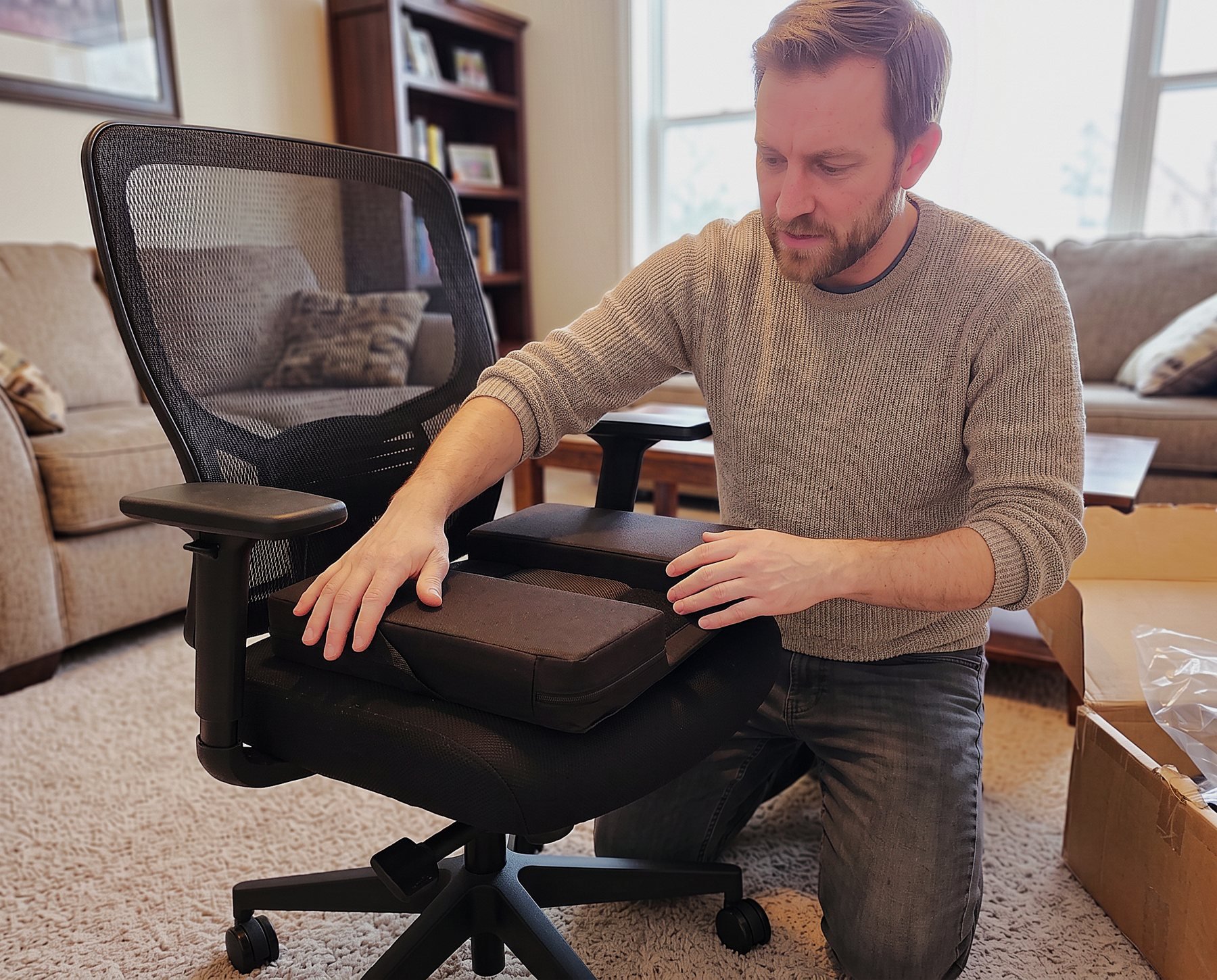
Finding Your Fit
Setting up the cushion takes four steps:
Place the cushion on your chair with the rounded edge toward the back of the seat, then sit on it. Sit all the way back so your buttocks cover the cushion.
Notice where your sit bones are resting. If they rest just barely on the inside edge of the foam panels, you've found your fit. If they're resting directly on top of the panels, or you feel like you're caving in toward the center, the panels need adjusting.
Remove the foam panels by slowly pulling them off the Velcro base.
Reattach them closer together if you feel like you're caving in, further apart if your sit bones rest on top of the panels, or angled into a V shape if you tend to sit with your legs further apart.
Repeat these steps until your sit bones rest just barely inside the open space between the panels. It can take a few tries to find the position that feels right, and small changes in placement make a noticeable difference.
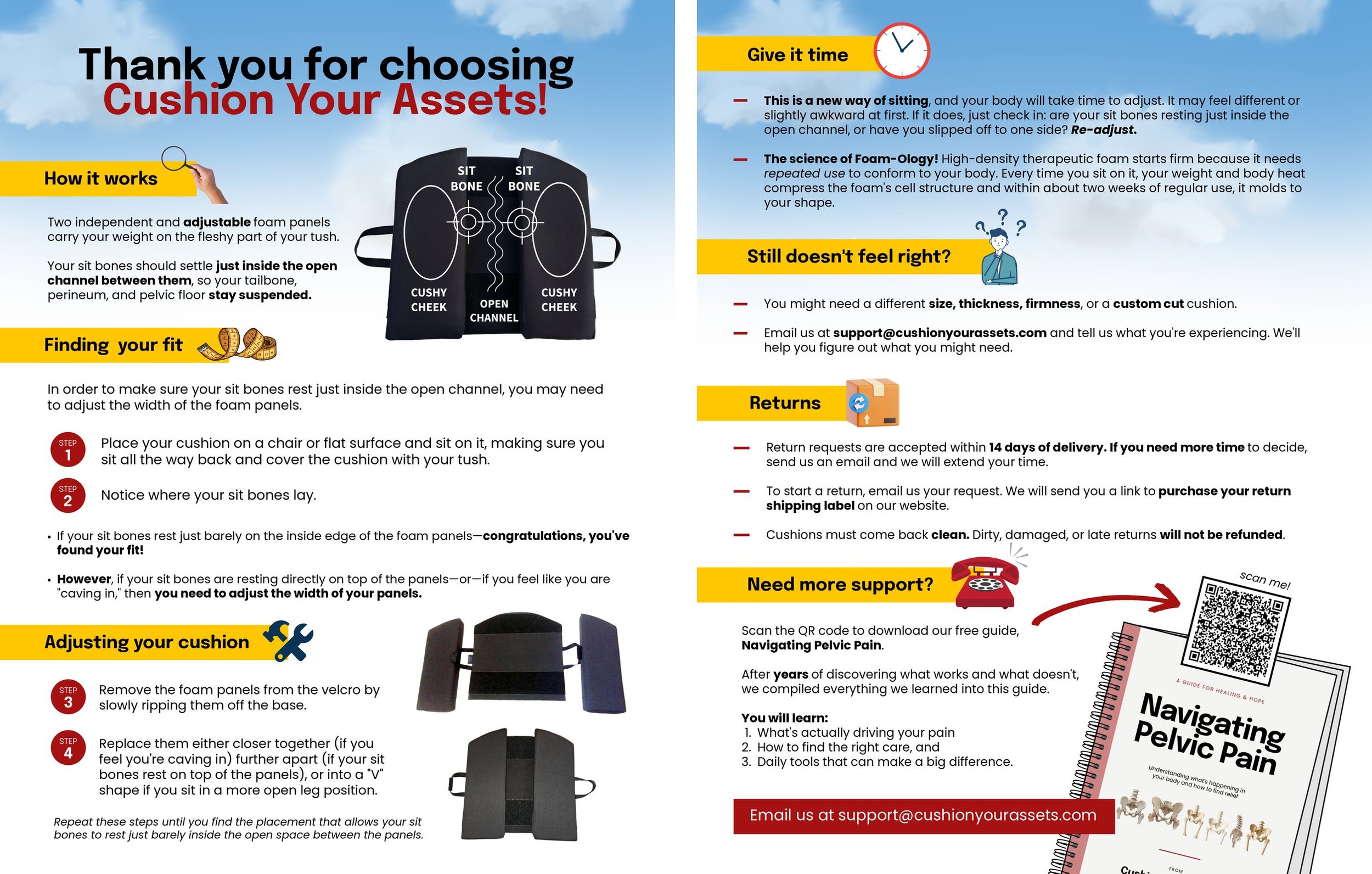
This is a copy of the package insert included with every Twin Cheeks cushion order. Come back here if you lose it.
What the First Two Weeks Feel Like
This is a new way of sitting, and your body needs time to adjust. The cushion may feel different or slightly awkward at first. If it does, check your position: are your sit bones resting just inside the open channel, or have you slipped off to one side? Re-center yourself and adjust the panels if needed.
The foam also changes during this time. High-density therapeutic foam starts firm because it needs repeated use to conform to your body. Every time you sit on it, your weight flexes the foam's cells, and over about two weeks of regular use it softens and settles in.
The Science of Foam-ology explains this process in more detail.
Use the cushion every day in the seat where you spend the most time. Consistent use is what breaks the foam in, and it gives your body the chance to get used to the new position.
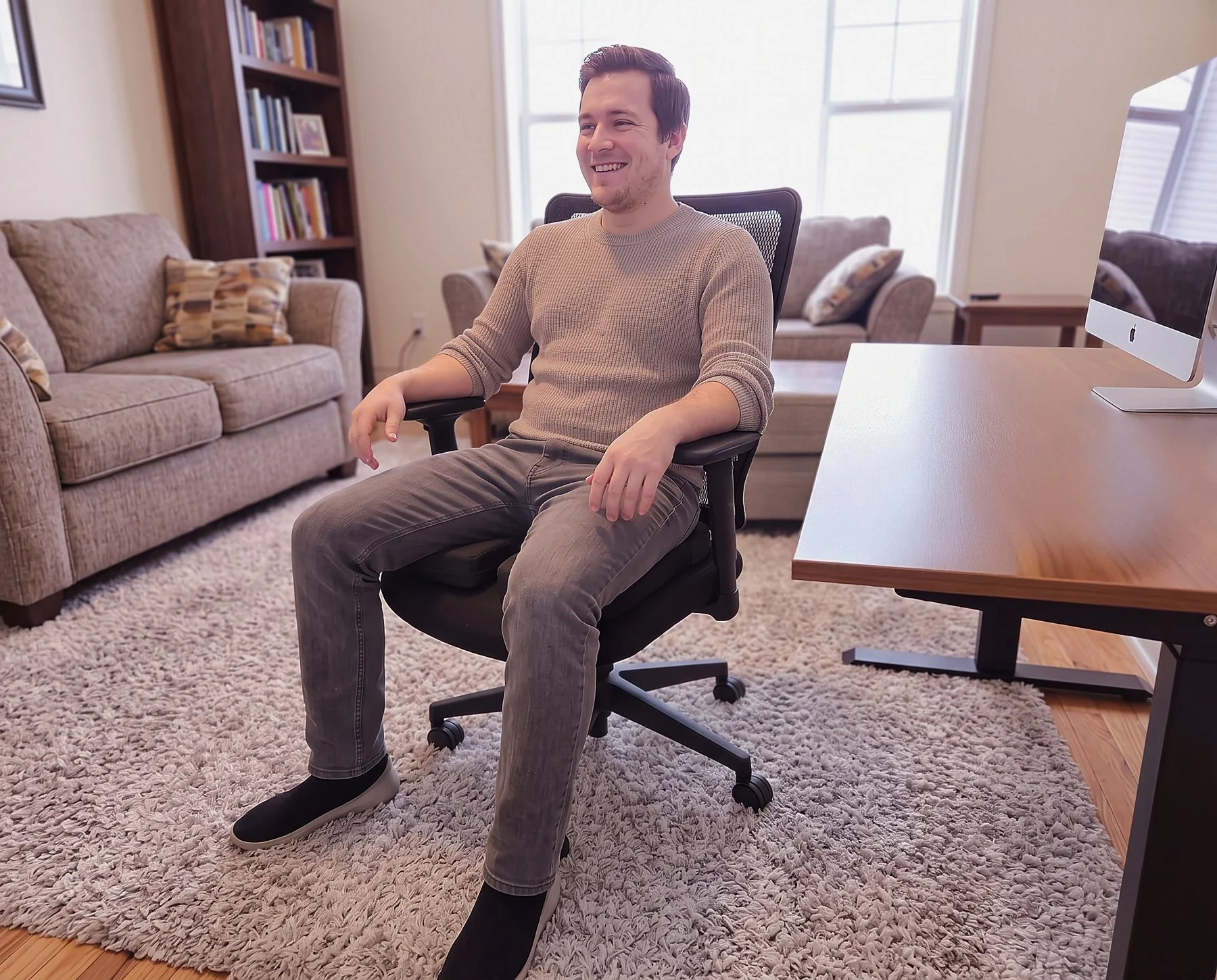
Using Twin Cheeks in the Car, at Work, and on the Go
All three thicknesses work in a car. The Regular 2" is the default recommendation for driving. Low Profile is a good choice for travel, if you prefer to sit lower, or if seat height is an issue in your vehicle.
At work, the cushion fits most office and task chairs. The bottom is a flexible, grippy material that helps it stay put on most seats. Because the cushion folds in half and has side handles, it's easy to bring to restaurants, appointments, or a friend's house.
Caring for Your Cushion
Each foam panel has its own zippered cover, so you can unzip the covers, remove them, and wash them. Replacement covers are also available in the shop.
If you like using heat or cold for pelvic pain, the Hot/Cold Pack is sold separately in the shop and can be used alongside the cushion.
If It Still Doesn't Feel Right
If you ordered without taking the Find Your Fit quiz, take it now to confirm you have the right size, firmness, and thickness for your body. It takes a few minutes, and a different firmness or thickness is sometimes all it takes.
If you've taken the quiz, used the cushion daily for two weeks, and adjusted the panels, and it still doesn't feel right, you may need some extra help figuring out what's going on. Contact us or email support@cushionyourassets.com and tell us what you're experiencing. A different size, thickness, or firmness, or a custom cut cushion, may be the answer. Custom cuts are made to order and aren't refundable, so they're usually considered after a standard cushion has been tried and adjusted.
Returns
Return requests are accepted within 14 days of delivery. If you need more time to decide, send us an email and we will extend your time.
To start a return, email your request and we'll send you a link to purchase your return shipping label on our website. Cushions must come back clean. Dirty, damaged, or late returns will not be refunded.
Haven't Ordered Yet? How to Choose Your Cushion
If you're reading this before ordering, the Twin Cheeks cushion takes pressure off the tailbone, perineum, and pelvic floor by suspending them in the open channel between two adjustable foam panels. It's a supportive tool that works alongside professional care, and it doesn't treat the underlying cause of pelvic pain. Many pelvic pain specialists include it in treatment plans for conditions such as tailbone pain (coccydynia), pudendal neuralgia, pelvic floor dysfunction, interstitial cystitis, chronic prostatitis/CPPS, endometriosis, vulvodynia, pelvic organ prolapse, and recovery after surgery or childbirth.
The cushion comes in two sizes. The 16" fits most people and most chairs, and the 18" gives more support under the thighs and suits wider seats like a wheelchair or recliner.
Firmness is chosen by body weight. The ranges overlap on purpose, so if you fall in an overlap you can choose by preference:
Soft: under 120 lbs
Medium: 120 to 150 lbs
Medium Plus: 130 to 180 lbs, with a supportive base and a softer top layer (our most popular)
Firm: 170 to 200 lbs
Extra Firm: 200 lbs and up
There are three thicknesses. Regular (2") is the standard, folds for travel, and works for most chairs. Low Profile (1.5") sits lower, folds smaller, and comes in Medium Plus, Firm, and Extra Firm. Extra Cush (3") is the plushest option, with extra-firm support under an extra-soft top layer, for people 170 lbs and up, and it doesn't fold as easily for transport.
The Find Your Fit quiz walks you through size, firmness, and thickness in a few minutes. Twin Cheeks is the right starting point for tailbone, sit bone, or rectal pain. The Simple Soother, which provides central support with no tailbone gap, is designed only for bladder, urethral, and genital or vaginal pain. For a broader look at what to look for in any seat cushion, see How to Choose the Best Seat Cushion for Pelvic or Tailbone Pain.
Common Questions About the Twin Cheeks Cushion
1. Is Twin Cheeks a donut cushion?
Twin Cheeks works differently from a donut cushion. A donut cushion has a hole in the middle and still puts pressure on the surrounding tissue. Twin Cheeks uses two separate, adjustable panels with an open channel between them, so the tailbone, perineum, and pelvic floor are suspended rather than surrounded by a ring of foam.
2. Is it made of memory foam?
They're made from dense, high quality therapeutic upholstery foam that starts firm and softens and settles in over about two weeks of regular use.
3. Will the cushion slide around on my chair?
The bottom of the cushion is a flexible, grippy material designed to help it stay in place on most seats, including office chairs, dining chairs, and car seats.
4. Can I use Twin Cheeks while driving?
Twin Cheeks works in the car at all three thicknesses, and the Regular 2" is the default recommendation. Low Profile is an option if seat height is an issue.
5. Why does my new cushion feel so firm?
The foam starts firm on purpose and softens and settles in with daily use.
6. Will the cushion cure my pelvic pain?
A cushion can't treat the cause of pelvic pain. Twin Cheeks removes sitting pressure as an aggravating factor, and many people find sitting more comfortable with it. It works best alongside care from a pelvic health specialist, and our Provider Directory lists more than 270 of them.
Getting the Most From Your Cushion
A few minutes of setup and two weeks of consistent use are what make the Twin Cheeks cushion work the way it's designed to. If you have a question at any point, from panel placement to firmness, our team is glad to help at support@cushionyourassets.com.
Stay ahead with the latest pelvic pain research, resources, and tips — delivered straight to your inbox.
This article is for informational purposes only and does not replace professional medical advice, diagnosis, or treatment. Always consult qualified healthcare providers for personalized medical guidance.
About Cushion Your Assets:
Founded by Trudy Jackson, who lived with chronic pelvic pain for 17 years, Cushion Your Assets makes patented, therapist-recommended cushions designed to assist in pelvic pain recovery. We also maintain a Provider Directory of 270+ pelvic health specialists to help you find care near you. All products are made and sourced in the USA.
