
Why Sitting Hurts: Menopause Pelvic Pain and What Helps
If sitting has started to bring on burning, rawness, or a deep ache in your pelvis since menopause, you may be dealing with menopause pelvic pain caused by lower estrogen. These changes often show up a few years after your last period, long after hot flashes have settled down.
When the tissue is sore and the muscles around it tighten, ordinary parts of the day get harder: a long drive, a work meeting, dinner out, or an evening on the couch.
The good news is that this kind of pain is treatable, and small changes to how you sit can help while you work on it.

Can Menopause Cause Pelvic Pain?
Menopause can lead to pelvic pain, most often through a condition called genitourinary syndrome of menopause, or GSM. You may also hear it called vaginal atrophy. As estrogen drops, the tissue of the vulva, vagina, and urethra becomes thinner, drier, and less elastic.
The International Society for Sexual Medicine estimates that GSM affects about half of postmenopausal women. Symptoms can include dryness, burning, genital pain or irritation, pain during sex, urinary urgency, and repeated UTIs. GSM is chronic and tends to progress over time, so waiting for it to pass usually doesn't work.
Urogynecologist Dr. Lauren de Winter of MemorialCare explains that some hormone-related pain, such as endometriosis pain, tends to ease after menopause. Falling estrogen and progesterone can then bring on GSM, usually several years after menopause begins.
Why Sitting Can Make It Worse
Dr. de Winter notes that GSM can affect the outer skin too, and many women feel itching, burning, tightness, or pain when they sit or move. Sitting presses your body weight into tissue that has become thinner and more sensitive.
The muscles play a part as well. When the tissue becomes painful, the pelvic floor muscles can tighten in response, and that tension adds its own ache. A tight pelvic floor needs release rather than strengthening, which is why Kegels can make this kind of pain worse. Our article on gentle exercises for a tight pelvic floor covers what to do instead.
When Pelvic Pain Isn't Just Hormones
New pelvic pain after menopause deserves a doctor's visit before you assume it's GSM. Pelvic pain has many possible causes, and some need to be ruled out first.
See your doctor promptly if you notice:
Any vaginal bleeding after menopause, which Mayo Clinic says should always be checked
Pain that is new, getting worse, or won't let up
Pain mostly on one side
Clinicians at Miror caution against brushing off these patterns as hormones alone. If sitting pain is your main symptom, our guide to finding the right provider for chronic pelvic pain and our Provider Directory of 270+ pelvic health specialists can help you find someone who listens.
What Helps Menopause Pelvic Pain
Treatment depends on the cause, so start with a provider who can examine you. For GSM-related pain, Dr. de Winter describes several options:
Low-dose vaginal estrogen, as a cream or suppository, which treats the tissue directly with very little reaching the bloodstream
Regular vaginal moisturizers, such as hyaluronic acid products, to keep tissue hydrated, plus a lubricant for sex
Non-hormonal options, such as DHEA cream for symptoms on the outer skin
Pelvic floor physical therapy, which uses relaxation techniques and hands-on release for tight muscles
She also encourages women to seek care when symptoms first appear, including during perimenopause, because untreated atrophy tends to get worse over time. Our article on why pelvic floor physical therapy matters explains what to expect from a pelvic floor therapist.
What to Tell Your Doctor
Pelvic pain is easier to diagnose when you can describe it clearly. Before your appointment, jot down a few notes:
Where you feel it, such as the vaginal opening, deeper in the pelvis, the tailbone, or the perineum
When it flares, such as while sitting, during sex, or when you urinate
How long it has been going on and whether it's getting worse
What you've already tried and what changed
Then ask directly whether GSM could be part of the picture and whether a referral to a pelvic floor physical therapist makes sense for you.
Sitting Changes That Take Pressure Off
Treatment takes time to work, and you still have to sit every day in the meantime. A few habits can lower the strain:
Get up and move regularly instead of sitting for long stretches.
Relax your pelvic floor while you sit by letting your belly soften and slowing your exhale.
Notice which seats hurt most, since hard chairs and car seats press directly on the center of the pelvis. Our article on pelvic pain when sitting explains why.
Use a cushion that takes weight off the sore area.
How a Cushion Can Help
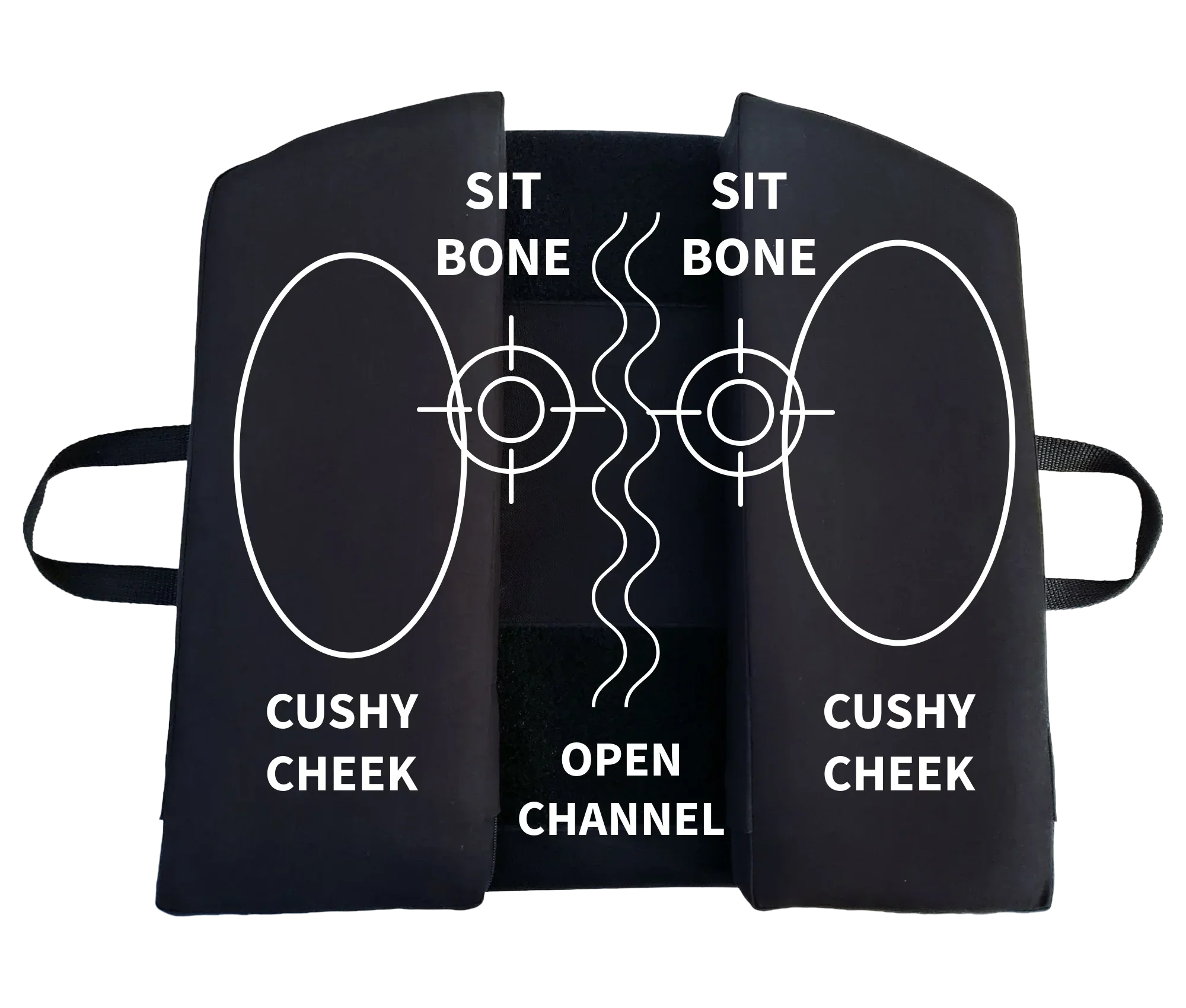
The Twin Cheeks cushion uses two independent foam panels with an open channel down the center. The panels carry your weight on the fleshy part of the buttocks, while your tailbone, perineum, and pelvic floor stay suspended in the channel. That redirects sitting pressure off sensitive tissue, and many people find sitting more comfortable as a result.
Trudy Jackson designed it after living with chronic pelvic pain for 17 years, and her specialist later asked her to make them for his clinic. It works alongside treatment as a supportive tool and doesn't treat GSM itself.
If your pain is mainly at the front, around the vaginal opening or urethra, and you have no tailbone or sit bone pain, the Simple Soother may be the better fit. It gives central support designed for bladder, urethral, and vaginal pain.
Not sure which one you need? Take the Find Your Fit quiz to match your pain area, size, and firmness. New foam starts firm and softens with use over about two weeks, and your body needs time to adjust too. If it still doesn't feel right after two weeks and adjusting the panels, contact us.
The Patented Twin Cheeks Folding Cushion for Pelvic Pain
Frequently Asked Questions
1. Can menopause cause pelvic pain?
Yes, lower estrogen can lead to GSM, which can cause burning, dryness, and pain in the vulva and vagina, and the pelvic floor muscles may tighten in response. New pain should still be checked by a doctor, since other conditions can cause it too.
2. Why does pelvic pain after menopause get worse when I sit?
Sitting puts direct pressure on tissue that has become thinner and more sensitive, and it can aggravate tight pelvic floor muscles.
3. Will menopause pelvic pain go away on its own?
GSM is chronic and tends to progress without treatment, so it's worth talking to a provider early.
4. Should I do Kegels for menopause pelvic pain?
If your pain comes from tight pelvic floor muscles, Kegels can make it worse. A pelvic floor physical therapist can tell you whether your muscles need release or strengthening.
Moving Forward
Pelvic pain after menopause is common and treatable, and it's worth raising with your doctor even if you've been told it's a normal part of getting older. Treatment for the tissue, release for tight muscles, and a seat that takes pressure off can all work together.
Stay ahead with the latest pelvic pain research, resources, and tips — delivered straight to your inbox.

This article is for informational purposes only and does not replace professional medical advice, diagnosis, or treatment. Always consult qualified healthcare providers for personalized medical guidance.
About Cushion Your Assets:
Founded by Trudy Jackson, who lived with chronic pelvic pain for 17 years, Cushion Your Assets makes patented, therapist-recommended cushions designed to assist in pelvic pain recovery. We also maintain a Provider Directory of 270+ pelvic health specialists to help you find care near you. All products are made and sourced in the USA.
